
9 Mineral-Rich Snacks for Post-Workout Recovery
Last Updated: November 8, 2026
Quick Summary
The best mineral-rich snacks for post-workout recovery pair minerals with protein or carbs, such as Greek yogurt with berries, a banana with peanut butter, chocolate milk, or roasted chickpeas. Choose two or three that fit your day and rotate them rather than relying on one perfect snack.
- Sodium is the mineral you lose in the greatest quantity through sweat.
- Chocolate milk, cottage cheese, and hummus with pita contribute meaningful sodium.
- Roasted chickpeas keep well in an airtight container in the fridge.
- Blend a fruit and yogurt smoothie and drink it fresh, or chill leftovers for later.
- Short, easy sessions in cool conditions usually need only water and a normal meal.
Table of Contents
- Why Minerals Matter for Post-Workout Recovery
- 9 Mineral-Rich Snacks for Post-Workout Recovery
- Mineral-Rich Post-Workout Snacks Vegetarian Athletes Can Rely On
- Choosing a Post-Workout Snack for Muscle Gain
- What to Eat After a Workout at Night
- Do You Need Electrolytes After Exercise?
- Matching Snacks to Workout Type and Sweat Loss
- Build Your Recovery Snack Rotation
- Frequently Asked Questions
Why Minerals Matter for Post-Workout Recovery
Sweat carries more than water. Every hard session costs you sodium, potassium, magnesium, and calcium, and those minerals drive the muscle contractions and nerve signals that keep you moving. That is why mineral-rich snacks belong in your recovery routine, not just a bottle of water.
Recovery nutrition is a two-part job. Protein and carbohydrates rebuild and refuel muscle, while minerals restore the fluid balance your body worked hard to maintain.
Sodium, Potassium, and Magnesium: What Sweat Takes Out
Sweat is salty for a reason. Sodium is the mineral you lose in the greatest quantity, and it helps hold water in your body and supports nerve and muscle function. For short, easy workouts, routine meals and water are usually enough to cover what you lose.
How much you lose depends on your sweat rate, the heat, your clothing, and how long you train. If you want to recognize the signs of a shortfall, our guide to electrolyte imbalance in athletes walks through the early warning signs.
9 Mineral-Rich Snacks for Post-Workout Recovery
These are the best mineral-rich snacks for post-workout recovery because each pairs a meaningful mineral contribution with protein, carbohydrates, or both. Amounts below are approximate and drawn from standard food-composition data for typical serving sizes; brands and preparation methods vary, so check the label when it matters to you.
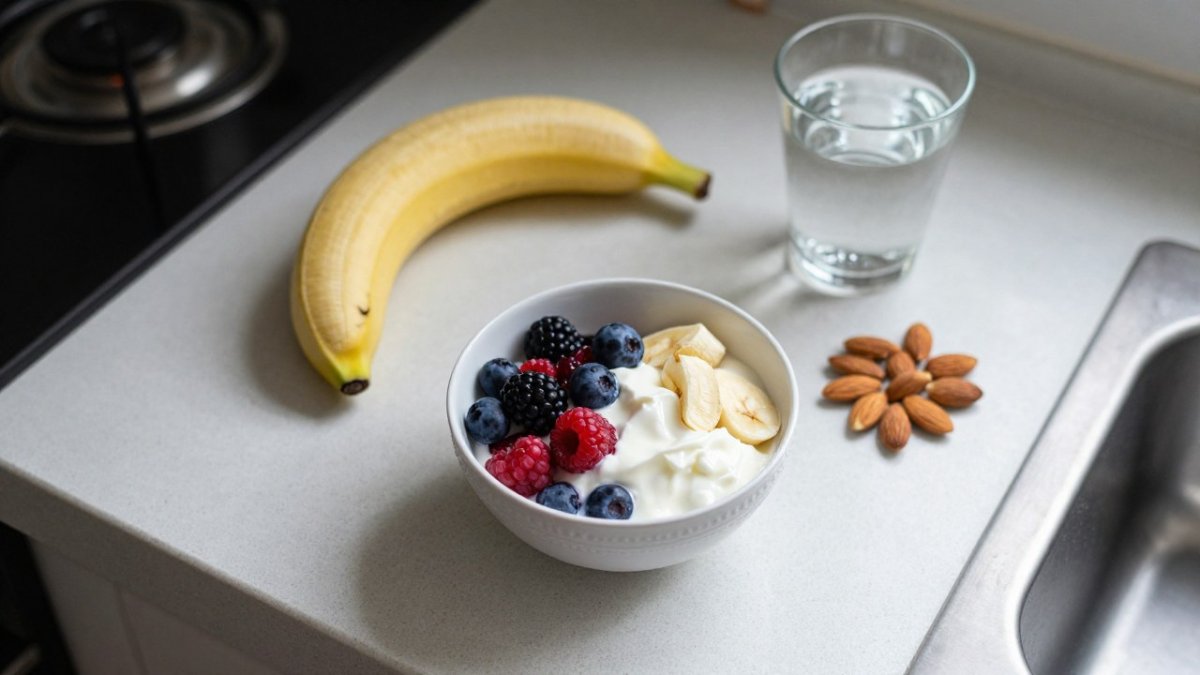
- Greek yogurt with berries (1 cup plain Greek yogurt + 1/2 cup berries). Roughly 300-350 mg calcium, 300-350 mg potassium, and 20-23 g protein. The protein is the main event for muscle repair; the calcium and potassium are a useful side benefit. Prep time is under two minutes, and it travels in a sealed container.
- Banana with peanut butter (1 medium banana + 2 tbsp peanut butter). About 600 mg potassium and 80 mg magnesium, plus healthy fat and 8 g protein to slow digestion (USDA FoodData Central). One of the highest-potassium options on this list and the easiest to eat in a locker room.
- Cottage cheese with sliced peaches (1 cup low-fat cottage cheese + 1/2 cup peaches). Around 24 g protein, 150 mg calcium, 300 mg potassium, and 700 mg sodium (USDA FoodData Central), a meaningful sodium contribution alongside the protein. Lower in carbohydrate than yogurt, so add a piece of toast if you trained long.
- Chocolate milk (1 cup low-fat). A classic protein-carbohydrate combo with roughly 300 mg calcium, 350-400 mg potassium, and 150-200 mg sodium, a useful sodium boost after heavy sweating. Cottage cheese and hummus with pita (below) also contribute meaningful sodium.
- Roasted chickpeas (1/2 cup cooked or canned chickpeas, roasted). About 6 g plant protein, 40 mg magnesium, and 240 mg potassium, matching USDA FoodData Central's values for cooked chickpeas (chickpeas, mature seeds, cooked, boiled, without salt). Toss cooked or canned chickpeas, drained and patted dry, with oil and spices, then roast at 400°F for 25-30 minutes. Let cool, then refrigerate promptly in a sealed container, since roasted chickpeas lose their crunch at room temperature.
- Oatmeal with banana and milk (1/2 cup dry oats + 1 cup milk + 1 banana). Roughly 300 mg calcium, 900 mg potassium, and 14 g protein in one bowl (USDA FoodData Central). Best eaten warm right after mixing, or made ahead as overnight oats and kept in the refrigerator for up to three days.
- Hummus with whole-grain pita (1/3 cup hummus + 1 small pita). About 60 mg magnesium and 200 mg potassium from the chickpeas and tahini, plus roughly 400 mg sodium between the hummus and pita (USDA FoodData Central), another meaningful sodium source alongside cottage cheese and chocolate milk. Portable if you pack the hummus separately.
- A fruit and yogurt smoothie (1 cup yogurt + 1 cup fruit + 1/2 cup milk). Roughly 400-500 mg potassium and 300-400 mg calcium, with fluid built in. Blend fresh and drink right away, or make it the night before and keep it sealed in the refrigerator until morning.
- Trail mix with nuts and dried fruit (1/4 cup). About 70-90 mg magnesium from the nuts and 200-300 mg potassium from the dried fruit. Calorie-dense, so measure a portion rather than eating from the bag.
How to Read Mineral Content Per Serving
The Nutrition Facts label is your fastest tool. Look at the percent Daily Value for potassium, calcium, and iron, and check the serving size first, because a snack you eat two of counts twice. For a concrete example, our Peach Mango electrolyte powder lists sodium, potassium, magnesium, and calcium on its label, which makes it easy to see what one scoop adds to your day.

Swaps for Dairy-Free, Nut-Free, and Lower-Sodium Diets
Not every snack fits every eater, and the mineral math changes with the swap.
- Dairy-free: Replace Greek yogurt with fortified soy or pea-protein yogurt (check the label for added calcium, usually 200-300 mg per cup), and replace chocolate milk with fortified plant milk plus a piece of fruit. Tofu cubes with edamame add calcium and magnesium without dairy.
- Nut-free: Swap peanut butter for sunflower seed butter or roasted pumpkin seeds, which still deliver magnesium (pumpkin seeds are especially high, around 150-160 mg per ounce). Trail mix can be rebuilt with seeds and dried fruit only.
- Lower-sodium: Lean on unsalted nuts, fruit, and plain yogurt, and look for lower-sodium versions of cottage cheese, hummus, and pita. Check labels on trail mix, flavored yogurt, and salted cheese snacks too, since sodium can hide in more than one item. If you are managing blood pressure or following a sodium-restricted plan, talk to your clinician before adding salty snacks or electrolyte drinks.
Watch out: a snack labeled "mineral-rich" on the front of the package may list only a small amount per serving, always compare the actual milligrams on the Nutrition Facts panel rather than trusting the marketing claim.
Mineral-Rich Post-Workout Snacks Vegetarian Athletes Can Rely On
Plant-based recovery takes a little more planning, mostly because iron and zinc are less absorbable from plant foods. The fix is pairing and variety. Beans, lentils, and chickpeas deliver potassium, magnesium, and iron.
Dairy-free eaters can lean on fortified plant milks and tofu for calcium. If you are over 40 and training hard, our guide to muscle recovery after 40 explains how protein timing and sleep change with age.
Choosing a Post-Workout Snack for Muscle Gain
For muscle gain, protein leads and minerals support. Aim for a snack that combines a solid protein source with carbohydrates and a mineral kick. Cottage cheese, Greek yogurt, eggs, and a glass of milk all fit.
Creatine is one of the better-studied supplements for supporting strength work alongside resistance training, but it complements real food rather than replacing it. For a closer look at which recovery supplements have evidence behind them, see our breakdown of supplements for faster muscle recovery.
What to Eat After a Workout at Night
Late sessions call for something light enough to sleep on. Heavy, greasy meals can disrupt rest, and sleep is when much of your muscle repair happens.
Keep the portion modest and include a little protein and carbohydrate. If you trained hard and sweated a lot, a small electrolyte drink can help replace sodium without a full meal. Then get to bed, because consistent sleep does more for recovery than any single snack.
Do You Need Electrolytes After Exercise?
Not always. Short, easy sessions in cool conditions usually need only water and a normal meal. If you are weighing whether to add them, you can explore our electrolyte hydration options to see what a scoop actually contains.
Matching Snacks to Workout Type and Sweat Loss
The right snack depends on what you just did. A short lift and a two-hour hot run place very different demands on your body, and the mineral that matters most shifts with the session. Use the table as a starting framework, then adjust for your own sweat rate and the conditions.
| Workout | What to Prioritize | Snack to Reach For | Why It Fits |
|---|---|---|---|
| Short strength session (under 45 min) | Protein need; little fluid or sodium lost | Greek yogurt with berries | Protein for repair; calcium and potassium come along for the ride |
| Long run in heat (60+ min) | Fluid and sodium replacement, plus carbs | Chocolate milk plus a banana | Sodium and fluid from the milk, potassium and carbs from the banana |
| Hot yoga or sweaty class | Fluid and sodium replacement | Electrolyte drink plus fruit | Replaces sodium lost in sweat; fruit adds potassium and carbs |
| Endurance ride (2+ hours) | Carb need, plus fluid and sodium replacement | Oatmeal with banana and milk | Sustained carbs plus a broad mineral spread |
| Evening session | Protein and light carb needs | Cottage cheese with peaches | Slow-digesting protein that sits comfortably before sleep, and the cottage cheese carries meaningful sodium too |
Estimating Your Own Sweat Loss
There is no universal sodium or fluid number, because sweat rate and sweat sodium concentration vary widely between people and change with heat, humidity, clothing, and fitness. A practical way to get a personal estimate of fluid loss: weigh yourself before and after a session, add back any fluid you drank and subtract any urine passed during that time, then treat the difference as a rough guide to how much fluid you lost. This is an estimate of fluid loss only, not sodium loss.
When Electrolytes Are Worth It, and When They Are Not
Sodium is the main mineral lost in sweat, more so than potassium, magnesium, or calcium. Electrolytes earn their place after long or intense exercise, in heat, or when you are a heavy sweater. For a short, easy session in cool conditions, water and a normal meal usually cover it, and adding an electrolyte drink to every workout is unnecessary.
Watch out: drinking large amounts of fluid, more than you are losing, during very long efforts can contribute to exercise-associated hyponatremia, a dangerous drop in blood sodium. A sodium-containing drink does not prevent this if you are still overdrinking, since the problem is excess fluid relative to sodium, not a missing electrolyte product. More fluid is not always better, and thirst plus a normal diet is a reasonable guide for most sessions.
Adjusting for Heat, Altitude, and Clothing
Heat and humidity raise sweat rate and sodium losses, so a hot-weather session may call for a saltier snack or an electrolyte drink even if the workout itself was moderate. Altitude and heavy clothing increase fluid loss too. On cooler days or during indoor sessions with good airflow, the same effort may cost you far less. The point is to match the snack to the conditions you actually trained in, not to a fixed rule.
Build Your Recovery Snack Rotation
The smartest approach is a rotation, not a single perfect snack. Keep a protein-forward option, a fruit-and-mineral option, and a hydration backup on hand so you are never guessing after a session.
Autophagy Nutrition's electrolyte hydration powders, in Lychee, Peach Mango, Lemonade, and Passion Fruit, are a caffeine-free electrolyte drink mix with sodium, potassium, magnesium, and calcium. If you want a dedicated hydration option, check the label and current listing for details, and use it alongside a snack or meal rather than in place of one, since food still supplies the protein and carbs you need to recover.
Your recovery does not need to be complicated, but it does need the right raw materials.
Frequently Asked Questions
What are the best snacks to eat after a workout to recover?
A snack that combines protein and carbohydrates with a few key minerals covers the most ground. Greek yogurt with berries and a sprinkle of nuts delivers protein, carbs, potassium, and calcium in one bowl. Chocolate milk, a banana with peanut butter, or a small bowl of oatmeal with fruit are similar options. Foods such as tart cherry juice and omega-3 sources are also studied in relation to recovery. Aim for a snack within a couple of hours of training.
Which mineral-rich snacks work for vegetarian athletes?
Many of these snacks are vegetarian, and several can be made fully plant-based. Greek yogurt and cottage cheese work if you eat dairy. For a fully plant-based option, try a smoothie with spinach, banana, and a spoonful of almond butter, or hummus with whole-grain crackers. Beans, lentils, nuts, and seeds all contribute magnesium, potassium, and iron. Pair plant iron sources with vitamin C, such as citrus or berries, to help absorption. If you avoid dairy, fortified plant milks can add calcium.
Do you need electrolytes after every workout?
No. Shorter or low-intensity sessions usually do not require a dedicated electrolyte product, because normal meals and water replace what you lose. Electrolytes after exercise matter more when you sweat heavily, train for long durations, or work out in heat. Sweat rate and sodium losses vary widely between people, so there is no single hourly target. For most everyday workouts, a mineral-rich snack and water cover it. A hydration powder is a practical option when sweat loss is high or when you want a caffeine-free way to replace sodium, potassium, magnesium, and calcium.
What is a good post-workout snack for muscle gain?
Look for a snack with a solid protein dose plus carbohydrates to support muscle repair and refill glycogen. Cottage cheese with pineapple, a protein smoothie with milk and banana, or eggs on whole-grain toast all fit. Protein and carbohydrate intake are central to recovery. Pairing the snack with resistance training and adequate total daily protein matters more than any single food. Supplements can complement this pattern, not replace it.
