
Role of Heat Stress in Physiological Recovery Explained
Last Updated: November 11, 2026
Quick Summary
Heat stress raises the work the heart, circulation and sweat glands must do, and that extra load carries into recovery. When the body cannot shed heat fast enough, exercise becomes harder, and the time needed to settle back down depends on the conditions you recover in. Cooler, drier environments tend to speed recovery, so the role of heat stress in physiological recovery is largely about how much strain was accumulated.
- Heat stress is the heat load placed on the body by exercise and the environment; when heat production exceeds heat loss, that is uncompensable heat stress, and it impairs endurance capacity and performance.
- Sending blood to the skin for cooling adds to cardiovascular demand, and that demand rises further when dehydration reduces circulating blood volume.
- A 2025 study of walking and recovery found faster physiological recovery, alongside more thermal discomfort, at lower standard effective temperatures; it did not examine muscle repair or next day performance.
- Confusion, slurred speech, seizures or loss of consciousness after heat exposure is an emergency: call 911 and start rapid cooling right away, don't wait for a temperature reading or give fluids by mouth.
- Move into shade or air conditioning, then remove extra layers to let sweat evaporate.
- Replace fluid and electrolytes lost in sweat, and eat a balanced meal within a few hours.
Table of Contents
- How Heat Stress Affects the Body During Exercise
- Physiological Responses to Exercise in the Heat
- Thermoregulation During Exercise in the Heat
- Heat Stress Recovery Time and Conditions
- How to Reduce Body Heat After a Workout
- Your Next Steps for Training Safely in Heat
- Frequently Asked Questions
How Heat Stress Affects the Body During Exercise
Exercising in the heat asks more of your body than the same workout in a cool room. Active readers often ask what heat is doing to their recovery, not just their sweat rate.
Heat stress is the heat load placed on the body by physical activity and environmental conditions.
Understanding this matters because recovery is not just a rest period.
Physiological Responses to Exercise in the Heat
When the body heats up, it leans on two main tools. The first is sweating. The second is cutaneous vasodilation, the widening of blood vessels near the skin that moves warm blood outward so heat can escape.
Heat also changes how the body fuels effort. Heat stress reduces the ability to reach maximal metabolic rates during exercise and shifts the balance toward anaerobic metabolism, as summarized in the National Academies Press chapter on physiological responses to exercise in heat.
Cardiovascular Strain and Heart Rate
Heat adds a cardiovascular burden on top of the muscular work. Warm blood is redirected toward the skin, increasing cardiovascular demand as the heart works harder to supply both skin and working muscle, a demand that grows further when dehydration reduces circulating blood volume. In a 2022 PubMed-indexed study comparing heating modes, exercise in the heat produced the greatest cardiovascular strain during heating among the modes examined. The practical takeaway: a heart rate that looks manageable on the watch may still signal a significant load.
Fluid Loss and Metabolic Demand
Sweating is how the body cools itself, but it also drains fluid and electrolytes. Body-water loss during exercise in the heat is one reason performance drops, and it is why hydration becomes central to recovery. Electrolytes such as sodium, potassium and magnesium are lost in sweat, which is why balanced replacement matters during long or heavy sweating.
Thermoregulation During Exercise in the Heat
Thermoregulation is the set of processes that keep core temperature within a safe range. During heat stress, it depends on increasing heat loss through sweat and skin blood flow, as explained in the Physiological Reviews article on human temperature regulation. The body is not trying to cool itself to a single fixed number; it is balancing heat production from working muscle against heat gain from the environment and heat loss through evaporation, convection, and radiation.
Three variables drive that balance during exercise:
- Metabolic heat production rises with intensity. Working muscle is inefficient, and most of the energy it uses becomes heat rather than mechanical work.
- Evaporation of sweat is the dominant cooling pathway once ambient temperature approaches or exceeds skin temperature. Sweat that drips off without evaporating provides little cooling.
- Skin blood flow carries heat from the core to the surface. Cutaneous vasodilation increases skin blood flow, but it competes with working muscle for cardiac output.
Why Humidity Changes Everything
When humidity is high, the air is already close to saturated with water vapor, so sweat evaporates poorly. You may sweat heavily and still see core temperature climb, because the sweat is not doing its cooling job. This is why the same thermometer reading can feel very different on a dry morning versus a humid afternoon, and why recovery can take longer after a humid session even at a moderate temperature.
Core Temperature Thresholds and the Limits of Cooling
Core temperature during exercise typically rises until heat loss matches heat production. When heat production outpaces the body's capacity to dissipate it, core temperature continues to climb, and that is where performance declines and heat illness risk rises.
Watch out: thirst is an imperfect guide during heavy sweating, and drinking far beyond thirst can dilute blood sodium, a pattern associated with exercise-associated hyponatremia. Fluid replacement should track sweat losses, not a fixed target.
Heat Acclimatization: The Adaptation
Repeated exposure to heat over roughly one to two weeks produces measurable adaptations: sweat rate increases and sweat becomes more dilute, sweating starts at a lower core temperature, skin blood flow response improves, and plasma volume expands. The result is that the same workload produces less cardiovascular and thermal strain. This is why a gradual build-up matters, jumping into a hot session without acclimatization produces more strain and slower recovery than the same session after a week or two of progressive exposure.
For recovery specifically, thermoregulation does not switch off when you stop moving. Core temperature can remain elevated for a period after exercise, and the body continues to sweat and redistribute blood flow while it sheds that residual heat. How fast you return toward baseline depends heavily on the environment you recover in.
Heat Stress Recovery Time and Conditions
A 2025 ScienceDirect study on time and environmental conditions for heat stress recovery, conducted in a controlled walking and recovery setting, reported that recovery time decreased as standard effective temperature (SET) decreased, while thermal discomfort increased.
For active readers, the lesson is straightforward: the cooler and drier the environment you recover in, the faster your physiology tends to settle.
How Environmental Conditions Shape Recovery
Environment changes the recovery picture in several ways:
- Temperature and humidity together determine how efficiently sweat cools you.
- Air movement can speed evaporation when it is not already saturated.
- Time spent in cool air after exercise supports faster recovery.
Guidance from the National Institute for Occupational Safety and Health on heat stress recommendations calls for limiting time in the heat and increasing recovery time in a cool area. Those principles translate well to training outdoors.
How to Reduce Body Heat After a Workout
The guidance below is a practical, structured cooling approach you can run without lab equipment.
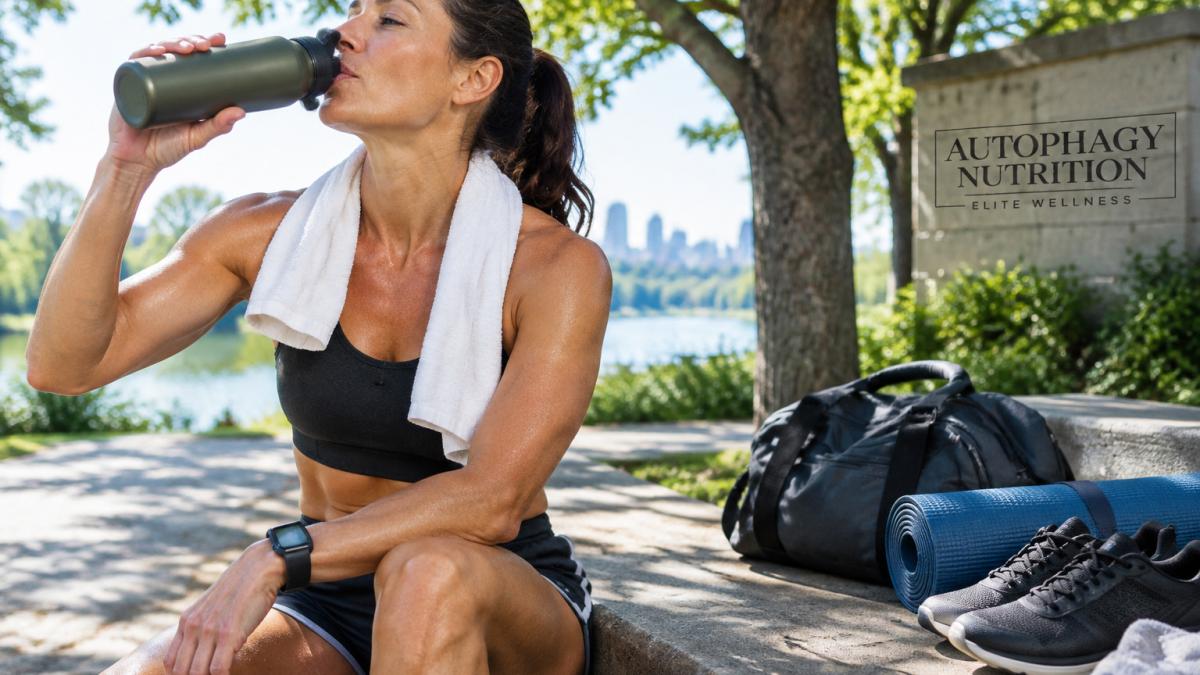
Once you finish, the goal is to help your body shed the remaining heat and return toward baseline. Core temperature stays elevated for a period after exercise stops, and the body keeps sweating and redirecting blood flow while it dissipates that residual heat.
A Practical Post-Heat Recovery Sequence
Medical emergency: confusion, slurred speech, seizures, or loss of consciousness after heat exposure are signs of a medical emergency. Call 911 and begin rapid cooling, such as cold water immersion or ice packs at the neck, armpits, and groin, while waiting for help. Do not wait for a temperature reading before acting, and do not give oral fluids to someone with impaired consciousness.
- Stop heat production first. End the session, move out of direct sun, and get into shade or air conditioning. Reducing heat production is faster than trying to out-cool an ongoing heat load.
- Remove extra layers. Clothing traps heat and blocks evaporation. Loosen or remove outer layers so sweat can evaporate and skin blood flow can do its job.
- Increase airflow. A fan, a breeze, or an open window speeds evaporation and convective heat loss. This is one of the cheapest and most effective cooling levers.
- Cool the skin directly. A damp cloth, cool shower, or cool water on the neck, wrists, and face accelerates heat loss through conduction and works well for routine recovery. If someone shows signs of exertional heat stroke, cold-water immersion is the most effective emergency cooling method when it can be done safely, and it should not be delayed.
- Replace fluid and electrolytes. Sip rather than gulp, and pair fluids with sodium-containing foods or an electrolyte drink to replace what sweat removed. Plain water alone is fine for short, light sessions; longer or heavily sweaty sessions benefit from electrolyte replacement.
- Eat a balanced meal within a few hours. Carbohydrates and protein support glycogen replenishment and muscle repair. Nutrient timing matters less than total intake across the day.
- Rest and sleep. Sleep is when much of the recovery and repair work happens. A hot session that ends late can push back sleep, so protect the wind-down window.
Cooling Methods Compared
Emergency warning: If someone shows confusion, slurred speech, seizures, or loss of consciousness after heat exposure, call 911 right away and start rapid cooling while you wait for help. Do not wait for a temperature reading, and do not give oral fluids to someone with impaired consciousness.
| Method | Mechanism | Best For |
|---|---|---|
| Shade or air conditioning | Lowers environmental heat load | Immediately after exercise |
| Fan or airflow | Speeds evaporation and convection | Indoor or still-air sessions |
| Damp cloth or cool shower | Conductive heat loss from skin | Quick, accessible cooling |
| Cold-water immersion | Rapid conductive cooling | Suspected heat stroke or elite recovery settings |
| Electrolyte fluids | Replaces sodium and other losses from sweat | Based on total sweat losses, meals, and timing of next session |
A cool shower and airflow work well for routine recovery after a hot session. If you suspect exertional heat stroke, such as confusion, collapse, or other signs of serious overheating, do not wait: cold-water immersion is an effective way to cool a person quickly when it can be done safely, and should be started right away while emergency help is on the way.
Where Hydration Fits
Alongside cooling, food, and rest, an electrolyte drink can be one optional way to help replace what you sweated out, such as our Lychee Premium Electrolyte Hydration Powder or Peach Mango Premium Electrolyte Hydration Powder. Follow the label directions: mix one scoop with 14-20 oz of water, adjust to taste, and treat five scoops in 24 hours as a maximum, not a target. One serving is unlikely to fully replace heavy sweat losses on its own.


For practical comparisons of options, look at the electrolyte and sodium content on the label, since that is what matters most for replacing sweat losses.
Nutrition Timing After Heat Exposure
On nutrition timing, a simple habit works well: rehydrate and eat a balanced meal with carbohydrates and protein within a few hours of finishing. How much electrolyte replacement you need depends on how much you have lost through sweat, whether you are still sweating, what you have already eaten, and how soon your next session is. Sodium is usually the key electrolyte to replace. For readers focused on recovery across the lifespan, our overview of recovery support for healthy aging covers how nutrition and habits fit together.
Your Next Steps for Training Safely in Heat
Start by checking conditions before you train. If you are training with older adults or a group, planning hydration in advance helps; our guide to maintaining hydration during senior exercise programs offers a practical framework.
Seek emergency care immediately if someone shows confusion, slurred speech, seizures, or loss of consciousness after heat exposure. Call 911 and start rapid cooling right away while help is on the way. Do not wait for a temperature reading, and do not give oral fluids to someone with impaired consciousness.
| Recovery Step | Why It Helps | When to Use It |
|---|---|---|
| Move to shade or AC | Lowers heat load | Immediately after exercise |
| Replace fluid and electrolytes | Restores what sweat removed | Based on accumulated losses and time until the next session |
| Cool shower or airflow | Speeds heat loss during routine recovery | Right after finishing |
| Cold-water immersion | Rapid cooling for suspected heat stroke | Immediately, while awaiting emergency help |
| Rest and eat balanced meals | Supports recovery | Within a few hours |
Heat stress is not inherently restorative. It raises strain on the heart and thermoregulatory system and can slow performance, so the aim is to recover well from it.
Frequently Asked Questions
What are the physiological responses to heat stress?
During heat stress, the body works to shed excess heat through sweating and cutaneous vasodilation, which widens blood vessels near the skin. Exercise in the heat can produce substantial cardiovascular strain, and when heat gain exceeds heat loss, endurance capacity and performance can decline. Heart rate, body-water loss, and perceived strain can all rise, which is why recovery after hot sessions often takes longer than recovery after similar sessions in mild conditions.
Can heat exposure improve exercise recovery?
The current research does not support heat exposure as a way to recover from excessive heat strain. Heating itself can impose significant cardiovascular strain, and high heat stress can impair endurance capacity. Heat acclimatization, and other studied heat interventions used in training contexts, can produce adaptations over time, but that is different from recovering well after a hot session. Readers who want to recover from heat strain should prioritize cooling, rehydration, and adequate rest.
How long does recovery from heat stress take?
Recovery time depends on the intensity of exposure, the environment, and individual fitness. In a controlled walking and recovery study, Shang and colleagues (2025) found that physiological recovery was faster at lower standard effective temperatures, even as thermal discomfort increased. Those findings describe recovery after walking exercise and should not be extended to muscle repair or next-day performance. The National Institute for Occupational Safety and Health recommends limiting time in the heat and increasing recovery time in a cool area to reduce risk.
How can you reduce body heat after a workout?
For routine recovery, move to a cooler, shaded area as soon as possible, remove extra layers, and rest while your breathing and heart rate settle. A cool shower and good airflow can speed heat loss, and drinking fluids to match losses helps support fluid balance, though needs vary with sweat rate and session length. Confusion, slurred speech, seizures, or loss of consciousness after heat exposure are signs of a medical emergency: call 911 and begin rapid cooling right away, do not wait for a temperature reading, and do not give oral fluids to someone with impaired consciousness. Cold-water immersion is an effective emergency cooling method when it can be done safely.
