
How to Maintain Hydration During Senior Exercise Programs
Table of Contents
- Why Hydration Matters for Senior Exercise Programs
- Signs of Dehydration in Older Adults: What to Watch For
- Hydration Before, During, and After Exercise: A Practical Schedule
- Electrolytes for Seniors During Exercise: When They Help
- Hydration and Exercise in Hot Weather: Adjusting Your Plan
- Medications, Health Conditions, and Personalizing Fluid Needs
- Conclusion
- Frequently Asked Questions
Last Updated: October 13, 2026
Why Hydration Matters for Senior Exercise Programs
Knowing how to maintain hydration during senior exercise programs starts with understanding that thirst sensation and water-conservation responses can change with age. Some older adults may benefit from paying more deliberate attention to hydration, particularly during exercise and in the heat.
Water supports circulation, temperature control, joint comfort, and muscle function during class.
Dehydration can make a 45-minute class feel like a struggle. It can also raise the risk of heat-related illness, especially in warm rooms or outdoor sessions.
Most people drink when they think of it. A schedule works better.
How Aging Changes Thirst and Fluid Balance
Thirst sensation and the body's water-conservation responses can change with age. For some older adults, this means fluid loss may go unnoticed for longer, so paying more deliberate attention to hydration, particularly during exercise and heat, can help.
That does not mean every senior is dehydrated. It means the early warning system is quieter.
- Thirst may show up late, after fluid levels already dropped
- Kidneys concentrate urine less efficiently with age
- Some medications increase fluid loss
The takeaway: pay attention to thirst and to conditions like heat or exercise intensity, and build in regular opportunities to drink rather than waiting until thirst sets in.
Signs of Dehydration in Older Adults: What to Watch For
Thirst sensation and the body's water-conservation responses can change with age, so some older adults may need to pay closer attention to hydration, especially during exercise and in the heat. Watch for fatigue, dizziness on standing, a dry mouth, headache, and dark urine.
Urine color is the simplest self-check. Pale yellow suggests good hydration. Dark amber suggests you need fluids.
Other signs worth noting:
- Muscle cramps during or after class
- Feeling unusually weak mid-session
- Confusion or trouble concentrating
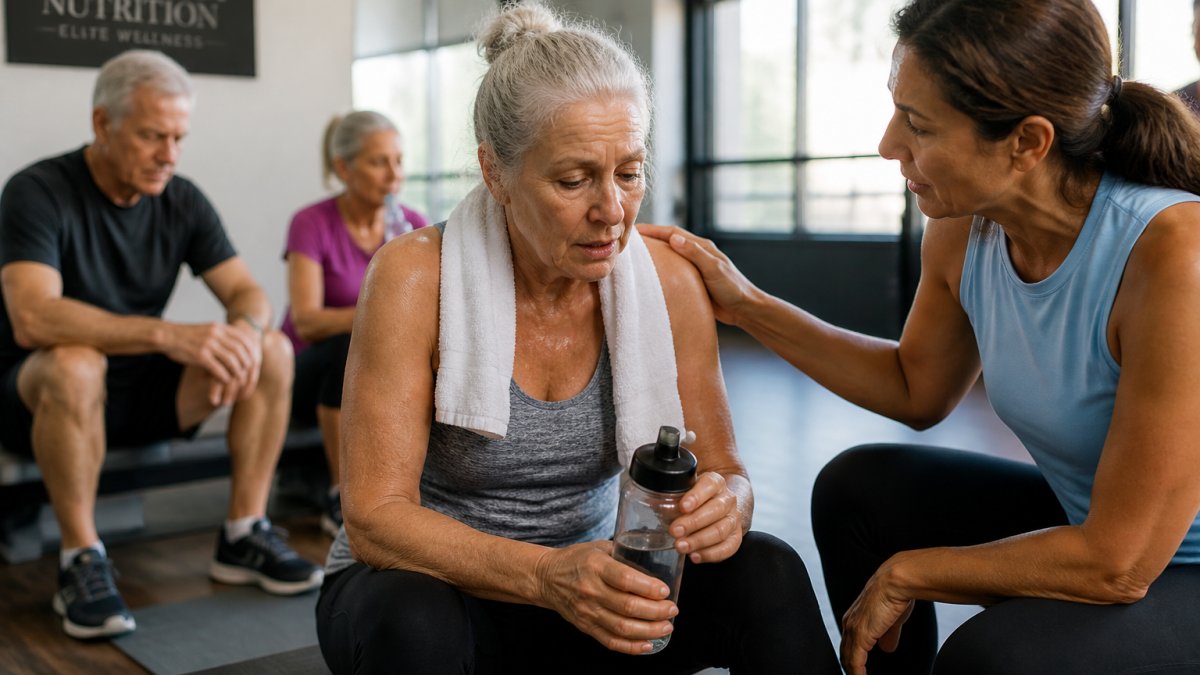
Instructors should watch for these too. A participant who stops sweating in the heat, or who looks pale and unsteady, needs to sit down and drink.
Hydration Before, During, and After Exercise: A Practical Schedule
A before-during-after routine works best when it is built around the actual class, not a generic workout. Session length, room temperature, how much you sweat, your body size, diet, medications, and your health status all shift the numbers. Use the framework below as a starting point, then adjust with your care team if you have fluid or sodium restrictions.
Before Class: Arrive Already Hydrated
Drink steadily in the two hours before class rather than gulping right before it starts. Arriving low on fluid is hard to fix mid-session.
- One to two cups of water about two hours before class
- A few sips in the last 10 minutes before you begin
- Skip heavy, very sugary drinks that sit uncomfortably during movement
A common pattern instructors see: participants who skip fluids all morning and then drink a large amount five minutes before class. That tends to cause stomach sloshing rather than better hydration.
During Class: Sip Regularly and Stay Attuned to Thirst
Small, frequent sips generally beat one large drink at the end. As a starting point, a few ounces every 15 to 20 minutes can work for a moderate indoor class, moving to every 10 to 15 minutes in heat or during heavier sweating, but treat these as examples rather than a fixed rule: actual fluid needs vary with body size, sweat rate, exercise duration and intensity, temperature, diet, medications, and medical conditions, so stay attentive to thirst and how you feel too.
Senior-specific logistics matter as much as the ounces:
- Water breaks built into class. Ask the instructor to schedule a standing water break every 15 to 20 minutes rather than leaving it to participants to pause on their own.
- Bottle placement. Keep a bottle on the floor beside your chair or mat, or on a nearby table, so you do not have to walk across the room or bend deeply to reach it.
- Mobility and grip. Wide-mouth bottles, flip tops, and lightweight bottles are easier to open with arthritic hands than tight screw caps.
If the room is warm or you sweat heavily, increase sip frequency and consider an electrolyte drink rather than water alone.
After Class: Replace Losses Gradually
Rehydrate over the next several hours rather than all at once. As a general starting point, a cup or two right after class followed by steady sipping through the afternoon can help replace losses without stomach discomfort, though exact amounts depend on how much you sweat, how long and hard you exercised, and your individual health and medication needs.
If you finished sweaty and drained, a drink with electrolytes can help replace minerals lost in sweat. Our Lychee Premium Electrolyte Hydration Powder provides sodium, potassium, magnesium, and calcium, with no sugar and no caffeine.

| Timing | What to Do | Why It Helps |
|---|---|---|
| 2 hours before | Drink 1-2 cups of water | Starts class well hydrated |
| Every 15-20 min during | Take small sips (every 10-15 min in heat) | Keeps fluid steady, avoids stomach sloshing |
| Right after | 1-2 cups, then steady sipping | Replaces sweat losses gradually |
| Rest of day | Water plus fluid-rich foods | Supports full rehydration |
These are general starting points, not a fixed prescription: actual fluid needs vary with body size, sweat rate, exercise duration and intensity, heat, diet, medications, and medical conditions, so adjust based on thirst, how you feel, and guidance from your doctor.
A Simple Hydration Log for Participants and Instructors
A short log makes the plan actionable and helps you spot patterns over weeks. Copy this into a notebook or print it for class.
| What to Track | Example Entry |
|---|---|
| Date and class type | Tue, chair aerobics, 45 min |
| Room conditions | Warm indoor, ~78°F |
| Fluids before class | 2 cups water |
| Fluids during class | ~6 oz, sipped at 3 breaks |
| Fluids after class | 2 cups water + 1 electrolyte drink |
| Sweat level | Light / moderate / heavy |
| Symptoms noticed | None / mild cramp / dizziness |
| Urine color after | Pale yellow / dark |
Instructors can use the same log to flag participants who consistently report dizziness, cramps, or dark urine, and to adjust break frequency for the whole class.
Lychee Premium Electrolyte Hydration Powder →
Electrolytes for Seniors During Exercise: When They Help
Electrolytes for seniors during exercise matter most when sweat losses are real.
For a light 30-minute class in a cool room, water is usually enough.
- Sweating heavily or for more than an hour
- Exercising in heat or humidity
- Feeling crampy or unusually drained after class
What most guides miss: electrolytes are not a daily requirement for every older adult. They replace what you lose.
Our hydration powders come in flavors like Peach Mango and Lemonade, each with an electrolyte blend and no sugar.


Hydration and Exercise in Hot Weather: Adjusting Your Plan
Hydration and exercise in hot weather calls for earlier and more frequent drinking. Heat raises sweat loss, so your normal plan needs to shift.
- Drink more before class, not just during
- Sip more often, for example every 10 to 15 minutes, and adjust based on your own thirst and sweat rate
- Choose shaded or air-conditioned spaces when possible
Move outdoor sessions to cooler hours. If the heat index is high, take class indoors. No schedule is worth a heat emergency.
Medications, Health Conditions, and Personalizing Fluid Needs
General hydration advice is a starting point, not a prescription. Fluid needs vary with body size, activity level, sweat rate, health status, and medication. For some older adults, the standard "drink more water" message is incomplete or even wrong without medical guidance.
Medications That Change Fluid and Electrolyte Balance
Several common medication classes affect how the body handles fluid and minerals. This is not a complete list, and it is not a substitute for asking your prescriber or pharmacist.
- Diuretics ("water pills"). These increase urine output and can shift sodium and potassium levels. Some people take them for blood pressure or heart failure. Fluid and electrolyte needs on diuretics are highly individual and should be discussed with a clinician.
- Blood pressure medications. Some classes affect fluid balance or how the body responds to heat and standing. Dizziness on standing can be a sign that fluid status or medication timing needs review.
- Medications that increase sweating or heat sensitivity. Certain drugs can make it harder to regulate temperature during exercise.
A practical step: bring your full medication list, including over-the-counter products and supplements, to your next appointment and ask two questions. Does anything here change how much fluid or sodium I should take?
Health Conditions That Change the Rules
For some conditions, more fluid is not automatically better. In others, sodium restriction matters as much as fluid volume.
- Kidney disease. The kidneys regulate fluid and electrolyte balance. When kidney function is reduced, both fluid and mineral intake may need to be limited or monitored. Do not add electrolyte supplements without clinician guidance.
- Heart failure. Fluid retention is a central concern. Many people with heart failure are given specific daily fluid limits by their care team. Those limits override general hydration advice.
- Hypertension. Sodium intake matters for blood pressure management. A high-sodium electrolyte drink may not be appropriate for everyone, even during exercise.
- Diabetes. Blood sugar control and hydration interact. High blood sugar can increase fluid loss, and dehydration can affect how you feel during exercise.
If you have any of these conditions, treat the general guidance in this article as background information and follow the plan your care team gives you.
How to Personalize Without Guessing
There is no single right number of cups per day for every senior. A reasonable approach is to start with a baseline, watch a few simple signals, and adjust.
- Urine color. Pale yellow generally suggests good hydration. Dark amber suggests you need more fluids. This is a rough guide, not a lab test, and some medications and supplements change urine color.
- Body weight before and after class. Changes in body weight can help estimate exercise-associated fluid loss, especially when considered alongside how much fluid you drank and your urine output during the session. This is one tool among several, not a precise formula for how much to replace.
- How you feel during and after class. Persistent fatigue, dizziness on standing, cramps, or headache after sessions are signals to review your plan.
- Heat and humidity. Adjust upward when conditions are warmer than usual.
Recheck your plan when medications change, when the seasons change, and when your class routine changes. What worked in a cool spring class may not work in a warm summer one.
Conclusion
Staying hydrated during senior exercise programs is a skill you build, not a lucky habit. Plan your fluids before, during, and after class, watch the warning signs, and adjust for heat and medication. For sweaty sessions, our electrolyte powders containing sodium, potassium, magnesium, and calcium offer a convenient way to replace lost minerals, with no sugar and no caffeine. Explore the full hydration line and find a flavor you will actually drink.
CDC guidance on water and healthier drinks
National Institute on Aging hydration information
MedlinePlus dehydration information
Frequently Asked Questions
How should older adults hydrate before, during, and after exercise?
Start with a glass of water about two hours before class, then sip 4 to 8 ounces every 15 to 20 minutes during activity, as a general starting point. After class, drink another 8 to 16 ounces over the next hour, adjusting as needed. These are general examples, not universal prescriptions. Individual needs vary based on body size, sweat rate, exercise duration and intensity, temperature, diet, medications, and medical conditions. Use a routine like this as a guide alongside attention to thirst and how you feel, not as a replacement for it.
Do seniors need electrolytes during exercise?
Not always. Electrolyte supplementation is most relevant with meaningful sweat losses, prolonged exercise, heat exposure, or situations involving fluid and mineral losses. For a 30-minute gentle class in a cool room, water is often enough. For longer or hotter sessions, a flavored electrolyte option like Autophagy Nutrition's Lychee Premium Electrolyte Hydration Powder can be a convenient way to replace sodium, potassium, magnesium, and calcium. People with kidney disease, heart failure, or on diuretics should ask their doctor first.
How can older adults tell if they are dehydrated while exercising?
Thirst sensation and the body's water-conservation responses can change with age, so some older adults may benefit from paying more deliberate attention to hydration, particularly during exercise and in heat. Watch for other signs too: fatigue, dizziness, dark yellow urine, dry mouth, headache, or muscle cramps. Check urine color before class as a simple monitoring tool. If you feel lightheaded or unusually tired during exercise, stop, sit down, and drink fluids. Instructors can help by building water breaks into the class schedule and watching for participants who seem off.
Which medications can affect hydration or electrolyte balance during exercise?
Diuretics, blood pressure medications, and some antidepressants can affect fluid and electrolyte balance. If you take any of these, ask your healthcare professional how they might change your hydration needs during exercise. They may recommend adjusting fluid intake, choosing electrolyte drinks, or timing medication around workouts. Never change medication timing without medical guidance. A simple monitoring tool like tracking urine color and how you feel during class can help you notice patterns.