
How to Activate Autophagy Without Fasting 2026
Table of Contents
- What Is Autophagy and Why It Matters for Longevity
- Exercise and Autophagy-Related Pathways: How Training Affects Cellular Signaling
- Dietary Strategies to Activate Autophagy Without Fasting
- Cold Exposure, Heat Stress, and Thermogenesis: Cellular Stress Responses
- Sleep Quality, Circadian Rhythm, and Reducing Constant Snacking
- Best Anti-Aging Supplements for Men Over 60: What the Evidence Shows
- How to Activate Autophagy Without Fasting: A Stacking Protocol
- Contraindications and Individualized Planning
- Frequently Asked Questions
Last Updated: September 11, 2026
What Is Autophagy and Why It Matters for Longevity
Autophagy is the cellular process by which cells break down and recycle damaged proteins and worn-out components through lysosomal degradation, a housekeeping system operating in every cell.
Here is the honest part most supplement marketing skips: much of the mechanistic research on autophagy comes from animal and cell models, not controlled human trials. We know the process exists in humans and supports cellular homeostasis, but a clean human dataset showing any specific lifestyle trigger produces a measurable longevity benefit is still developing. This guide walks through what the evidence supports and where the gaps sit.
Cellular Recycling and the Nutrient-Sensing Pathways Behind It
Two pathways anchor most of the conversation: mTOR and AMPK. When nutrients are abundant, mTOR activity tends to rise, supporting growth and protein synthesis. When energy is scarcer, AMPK activity tends to rise, a shift linked in research models to increased cellular recycling. The balance between the two is more of a dial than a switch, moving gradually with meals, activity and sleep rather than flipping all at once.
Exercise and Autophagy-Related Pathways: How Training Affects Cellular Signaling
Exercise affects the same nutrient-sensing pathways fasting does. Training creates a temporary energy deficit inside muscle cells, which raises AMPK activity and can suppress mTOR signaling for a window afterward. Human studies have measured changes in autophagy-related markers after exercise, particularly in skeletal muscle, though that is a different claim from proving increased whole-body autophagic flux. Exercise's benefits for strength, metabolic health and healthy aging are well established on their own, independent of what is still being worked out about autophagy specifically.
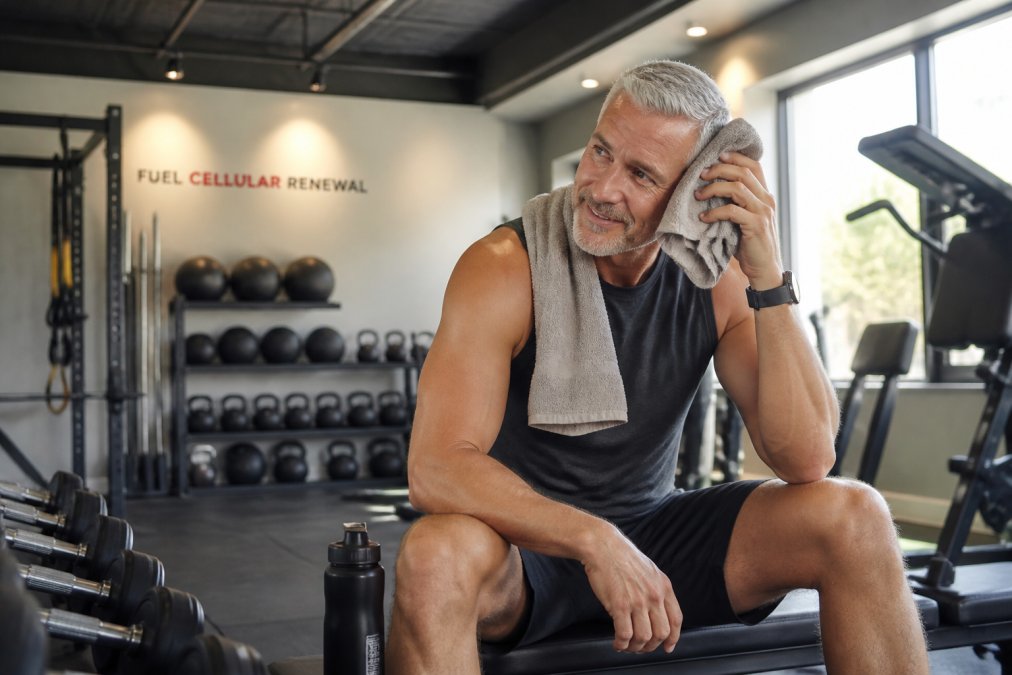
Strength Training, Cardiovascular Exercise, and Glycogen Depletion
Both modalities work, but differently. Resistance training drives mTOR through mechanical tension, which is why it builds strength and lean mass. Cardiovascular exercise, particularly longer steady sessions, depletes glycogen and raises AMPK activity, a signal that in research models is linked to increased autophagic activity, though the human evidence for this specific link is still limited.
A practical split: two or three resistance sessions weekly for strength and lean mass, plus two or three aerobic sessions for metabolic flexibility. Research from the American College of Sports Medicine's exercise position stands supports combining both for healthy aging rather than choosing one.
Dietary Strategies to Activate Autophagy Without Fasting
Food-based triggers are where the research gets interesting and the marketing gets sloppy. Several compounds in ordinary foods influence the same nutrient-sensing pathways fasting does, but through different entry points. Understanding those entry points separates a real strategy from a random grocery list.
The Hormonal Layer Most Articles Skip: Insulin, Glucagon, and the mTOR/AMPK Balance
When you eat, especially carbohydrates and protein, blood glucose rises and the pancreas releases insulin. Insulin is a storage hormone: it signals that fuel is available and, in research models, is associated with higher mTOR activity and lower AMPK activity in some tissues. This is a normal, necessary part of digestion, not something to avoid. These pathways are dynamic and tissue-specific, shifting gradually through the day rather than flipping to one fixed state.
When insulin falls during an overnight fast or a longer gap between meals, glucagon rises and signals the liver to release stored glucose. In animal and cell research, this same window, lower insulin alongside higher glucagon, lines up with rising AMPK activity and falling mTOR activity, conditions linked to increased cellular recycling. Whether that link holds at a meaningful scale in humans is still being studied, and these shifts happen gradually rather than switching on or off with any single meal.
This is one reason the rhythm of eating draws attention alongside any single food: fewer, more consolidated meals tend to produce more time with lower insulin than frequent grazing across a long window. That pattern is linked to better glucose and insulin markers in human studies, but improved markers are not the same as a proven increase in autophagy, a distinction worth keeping in mind through the rest of this guide.
Spermidine-Rich Foods, Polyphenols, and Protein Cycling
Spermidine is a polyamine found in wheat germ, aged cheese, mushrooms, soy, and legumes. In animal and cell studies, it has been explored as a caloric-restriction mimetic, proposed to nudge mTOR and related pathways the way fasting does. Observational studies in humans have linked higher dietary spermidine intake to some health markers, and a handful of small human intervention trials are underway, but none have demonstrated that spermidine-rich foods produce clinically meaningful autophagy or extend human lifespan. Treat it as a reasonable food choice worth including regularly, not a proven intervention.
Polyphenols, the compounds behind the color in berries, the bitterness in green tea, and the bite in extra-virgin olive oil, have been shown in cell and animal research to activate AMPK and related pathways. In humans, the autophagy angle is still observational and mechanistic, not demonstrated. Separately from that hypothesis, these foods carry well-established nutritional benefits on their own, so a reasonable pattern is daily berries, a cup or two of green tea, and olive oil as a primary fat.
Protein, particularly the amino acid leucine, is a strong mTOR activator, which is part of why protein intake shapes these nutrient-sensing pathways. Some researchers have proposed deliberately cycling in lower-protein days to give AMPK more room, but this isn't an established human intervention, and the evidence for adequate daily protein paired with resistance training to preserve muscle and strength with age is considerably stronger. If you train or are over 60, that combination, not protein restriction, is the better-supported priority.
| Trigger | Primary Pathway | Practical Pattern | Evidence Level |
|---|---|---|---|
| Spermidine-rich foods | mTOR inhibition (proposed) | Daily servings of wheat germ, mushrooms, legumes, aged cheese | Preliminary, mostly animal data |
| Polyphenols (berries, green tea, olive oil) | AMPK activation (proposed) | Daily dietary intake | Observational and mechanistic |
| Time-restricted eating | Meal timing and metabolic effects | Sustainable eating window | Human evidence for some metabolic outcomes; direct autophagy effect uncertain |
| Meal consolidation | Reduces eating frequency | Distinct meals rather than constant grazing | Human metabolic evidence varies; direct autophagy effect unproven |
What the Evidence Actually Supports
It is worth being blunt: no dietary pattern has been shown in controlled human trials to produce a measurable longevity benefit through autophagy specifically. What the human data supports is that time-restricted eating and meal consolidation improve markers like fasting insulin and glucose in many people, and those markers are associated with metabolic health. The autophagy link is largely mechanistic and preclinical, these strategies are worth doing for the metabolic reasons we can measure, with cellular recycling as a plausible but unproven bonus.
Cold Exposure, Heat Stress, and Thermogenesis: Cellular Stress Responses
Deliberate temperature stress is the most underrated trigger on this list. Cold exposure activates thermogenesis and has been associated with cold shock proteins; sauna use has been associated with heat shock proteins. Both families help cells manage stress and fold proteins correctly.
The practical version: a cold shower, brief cold plunge, or sauna session a few times per week, nothing extreme. The evidence here is largely mechanistic and observational, so treat temperature stress as a supporting habit rather than a primary strategy.
Sleep Quality, Circadian Rhythm, and Reducing Constant Snacking
Sleep supports health and recovery, and circadian rhythm governs when many processes run most efficiently. Shift workers and people who sleep poorly show disrupted nutrient-sensing patterns in observational research, which is one reason sleep deserves equal billing with diet and exercise.
Constant snacking is the quieter problem. Frequent eating keeps insulin and mTOR signaling more consistently active, which is a different metabolic state than periods without food. Consolidating meals into a more defined eating window, even without a full fast, improves measurable markers like glucose and insulin control. That does not, on its own, prove it increases autophagy in humans, but it is a reasonable, low-risk habit to build toward.
Best Anti-Aging Supplements for Men Over 60: What the Evidence Shows
No supplement has been shown in controlled human trials to extend lifespan or reverse aging. What certain compounds do have is developing human data on intermediate markers, a different and narrower claim.
NAD+ is involved in normal cellular processes including energy metabolism, and NMN is an NAD+ precursor. Human research on NMN is still developing, and the field has not established that raising NAD+ levels translates into a health outcome. Autophagy Nutrition's Premium NMN provides 500 mg per serving in a single-ingredient capsule, and the NAD+ supplement contains NAD+ with quercetin and Japanese knotweed in a vegetable capsule. Both are positioned as daily routine support, not proven longevity interventions.


For strength, power and muscle outcomes in this age group, creatine has far stronger human evidence than either NMN or NAD+, though that evidence is about muscle performance, not autophagy. It supports strength and high-intensity performance through the phosphocreatine system, particularly alongside resistance training. Anabolic resistance is real, meaning older adults need adequate daily protein and resistance training to preserve muscle, but creatine is not a substitute for either.
How to Activate Autophagy Without Fasting: A Stacking Protocol
This is not a clinically validated autophagy protocol, no such protocol exists yet. Think of it instead as a practical healthy-aging routine built around behaviors linked to pathways associated with autophagy: exercise, sleep, nutrient-dense eating and reasonable meal structure come first, with foods like spermidine sources and temperature stress as optional extras. "Stacking" means layering habits, not doubling doses.
- Build a consistent eating rhythm. Consolidate meals into a window you can sustain, such as 10-12 hours, rather than grazing all day. This is one practical lever alongside regular exercise, adequate sleep and a nutrient-dense diet.
- Exercise regularly. Combine resistance training and aerobic work, and keep it consistent rather than chasing an exact frequency.
- Eat a nutrient-dense diet. Prioritize adequate protein alongside resistance training to preserve muscle as you age.
- Protect sleep. Consistent bedtime, dark room, no late meals.
- Try spermidine-rich foods if you like. Wheat germ, mushrooms, legumes, aged cheese are worth exploring, not required.
- Add temperature stress if you want to. A cold shower or sauna session a few times a week, kept brief, is optional.
- Consider targeted supplements last. Only after the above are consistent, and with realistic expectations about what the evidence supports.
Contraindications and Individualized Planning
Most articles on this topic end with a one-line "consult your doctor" and move on. That is not useful. The triggers above are generally low-risk for healthy adults, but several interact with specific conditions, medications, and life stages in ways that change the calculus.
Who Should Modify or Avoid Specific Triggers
Cold exposure (cold showers, cold plunges). Cold water immersion carries a real cardiovascular stress response, heart rate and blood pressure rise sharply on entry. People with known cardiovascular conditions, uncontrolled hypertension, or a history of arrhythmia should get medical clearance first, as should anyone with a prior cold-water incident. For everyone else, enter gradually, never alone in open water, and skip it if you feel unwell.
Sauna and heat stress. Heat exposure increases cardiovascular workload and causes fluid and electrolyte losses through sweating. People with cardiovascular conditions, those taking medications that affect blood pressure or fluid balance (including many diuretics), and anyone prone to fainting should get clearance first. Alcohol and sauna do not mix. If you take a potassium-sparing diuretic, note that heat and sweating affect potassium handling differently than loop or thiazide diuretics do, a conversation for your clinician, not a general article.
Time-restricted eating and meal consolidation. People with a history of disordered eating, or anyone for whom hunger cues or food restriction is psychologically difficult, should be cautious with structured eating windows. Pregnancy and breastfeeding raise energy and nutrient needs, and restrictive timing is generally not appropriate without professional guidance. If you take medication that must be taken with food at specific times, thyroid medication, some diabetes medications, certain HIV and transplant drugs, build the eating window around the medication schedule, not the reverse.
Supplements. Anyone pregnant or breastfeeding, taking prescription medication, or managing a diagnosed condition should talk to a healthcare professional before adding any supplement. Kidney and liver conditions in particular change how the body handles many compounds, and supplement decisions should be individualized rather than copied from an article.
Matching the Protocol to Your Actual Capacity
Individualized planning also means matching the protocol to your current fitness and recovery, not an idealized version of yourself. A 68-year-old returning to training after a decade off should not start with five sessions per week. A reasonable progression is two sessions weekly for the first few weeks, adding one every two to three weeks, and holding steady whenever sleep quality, mood, or performance trends downward. Temperature stress follows the same logic: start with a 30-second cool shower at the end of a normal shower, not a full cold plunge.
The general principle: each trigger is a stressor. Stressors produce adaptation when dosed appropriately and followed by recovery, and problems when stacked faster than you can recover. If you add three new triggers in the same week, you have no way to tell which is helping and which is wearing you down.
A Note on Tracking
Some people track proxies, fasting glucose, ketones, resting heart rate, or how they feel across a week, to see whether a change is doing anything. These are monitoring tools, not diagnostic measures of autophagy, and no consumer device currently measures autophagy directly. Interpret trends alongside how you actually feel and perform, not in isolation. If a metric looks alarming and does not match how you feel, that is a conversation for a clinician.
Frequently Asked Questions
Is there a way to induce autophagy without fasting?
Several non-fasting behaviors, especially exercise, influence pathways and markers associated with autophagy, but scientists cannot yet translate those signals into a precise at-home prescription for 'turning on' autophagy in humans. Regular exercise, particularly vigorous cardiovascular exercise and resistance training, activates AMPK and reduces mTOR signaling, and some human studies show related markers changing in skeletal muscle, though that is not the same as a confirmed increase in whole-body autophagy. Dietary compounds found in foods like spermidine-rich wheat germ, mushrooms, and aged cheese have mostly been studied in observational and animal research for a possible role. Cold exposure and heat stress from sauna use trigger heat-shock and cold-response signaling that researchers are studying for a possible connection to cellular repair, not a demonstrated increase in autophagic flux. Sleep quality and circadian rhythm alignment matter too. Keep in mind that much of this research comes from animal and cell models, so human outcomes are still being established.
How do exercise-induced autophagy mechanisms work?
Exercise creates metabolic stress that activates AMPK, a cellular energy sensor, while temporarily reducing mTOR signaling, the pathway that promotes growth. In theory this shift favors cellular cleanup over cellular growth, and some human studies find changes in autophagy-related markers, particularly in skeletal muscle, after exercise, though that is different from a confirmed rise in autophagic flux across the body. Glycogen depletion during prolonged or intense training is thought to amplify this signal, though this is not established as a human outcome. Resistance training and cardiovascular exercise both contribute, though the exact magnitude of autophagy activation in humans is still being researched. The key takeaway is that consistent physical activity has well-established healthy-aging benefits on its own, separate from the still-developing autophagy evidence.
What are the best anti-aging supplements for men over 60?
The evidence for supplements supporting healthy aging is still developing. NMN (nicotinamide mononucleotide) is an NAD+ precursor studied for its role in cellular energy metabolism, though human outcome research is ongoing. NAD+ itself is involved in normal cellular processes. Shilajit, an adaptogen-rich resin, has a long history of traditional use, but human research on it is limited, so specific benefit claims should be treated cautiously. Creatine monohydrate has strong evidence for strength and lean mass when combined with resistance training. Always consult a healthcare professional before starting any supplement, especially if you take medications or have health conditions.
How can I tell if my body is in autophagy?
There is no simple at-home test to confirm autophagy is active. Researchers measure markers like LC3-II and p62 in laboratory settings, but these are not available for routine consumer use. Some people track indirect signals such as energy levels, mental clarity, or recovery, but these are subjective and not reliable indicators. The most practical approach is to focus on habits that support cellular health: regular exercise, quality sleep, nutrient-dense eating patterns, and avoiding constant snacking. If you are interested in measuring autophagy markers, discuss options with a healthcare provider.