
Hidden Sodium in Packaged Foods: A Label-Reading Guide
Last Updated: November 19, 2026
Quick Summary
Hidden sodium is sodium in foods that may not taste salty, such as bread, cereal, sauces, and soups. Salt is only one source of that sodium. The most reliable way to spot it is to check the sodium milligrams per serving on the Nutrition Facts label, multiplied by the servings you actually eat.
- Bread, canned soups, deli meats, cheese, and condiments often carry more sodium than shoppers expect.
- Sodium appears on ingredient lists under names like MSG, sodium benzoate, and disodium phosphate.
- Check the serving size first, then multiply the sodium per serving by the servings you will eat.
- A canned soup listing 800 mg per cup can reach 1,600 mg if you eat the whole two-serving can.
- Products labeled healthy, natural, or organic do not signal low sodium, so check the milligram number.
Table of Contents
- Why Packaged Foods Carry More Sodium Than You Expect
- The Foods That Most Often Hide Sodium
- How to Read Sodium on Food Labels
- Ingredients That Contain Sodium Beyond Salt
- Serving Size Math: Comparing Products Fairly
- What Low-Sodium Label Claims Actually Mean
- Your Next Step: Auditing Your Grocery Basket
- Frequently Asked Questions
Why Packaged Foods Carry More Sodium Than You Expect
Hidden sodium is sodium in foods that may not taste salty, like bread, cereal, and sauces. Salt is only one source of that sodium. Many readers are surprised by how much sodium turns up in everyday packaged items. Sodium is an essential mineral, but most of it reaches the table through processed and prepared foods rather than the salt shaker.
The reason is simple. Manufacturers use sodium to preserve food, add flavor, control texture, and extend shelf life. A product can taste only mildly savory and still contain a large amount of sodium per serving.
This guide walks through where sodium hides, how to read a Nutrition Facts label, and how to compare products fairly. Start with the label, not the front of the package.
The Foods That Most Often Hide Sodium
Several food categories tend to carry more sodium than shoppers expect. Check these first, and note why each one earns a place on the list:
- Bread, rolls, and tortillas. Sodium is used for dough conditioning and flavor, so a single slice or wrap can contribute meaningful sodium even though it tastes neutral. Because people eat bread in multiples, the per-serving number understates a typical day.
- Canned soups and broths. A can often holds two or more servings, and sodium varies by brand and recipe. Soup is one of the clearest cases where the label number and the amount eaten diverge.
- Deli meat and processed meats. Sodium supports preservation, texture, and water retention. Sliced turkey or ham that reads as lean can still be one of the highest-sodium items in the basket.
- Cheese and cottage cheese. Salt is used in cheesemaking for flavor and preservation, and cottage cheese is often salted for taste. A small portion can add up quickly across a day.
- Frozen meals and pizza. Multiple sodium-containing components (crust, sauce, cheese, cured toppings) stack in one package, and the package is usually eaten as a single sitting.
- Condiments, sauces, and salad dressings. Soy sauce, ketchup, and many dressings are concentrated sodium sources. The serving is small, but people rarely measure it.
- Snack foods like crackers and chips. Salt is applied for flavor, and the serving size is small relative to how much people actually eat.
- Restaurant and takeout items. These sit outside the Nutrition Facts panel entirely, so the only reliable move is to ask for nutrition information or request sauces and dressings on the side.
Many of these foods do not taste salty. A slice of bread or a spoonful of cottage cheese can add meaningful sodium to a day without drawing attention. Packaged items that seem healthy, such as granola or flavored yogurt, vary widely in sodium depending on the brand and recipe, because sodium is used for texture and shelf life as well as taste. The Nutrition Facts panel, not the healthy label, is the only reliable way to check a specific product.
Watch out: "healthy" is a regulated claim that includes a sodium limit, but it is not the same as "low sodium." "Natural" and "organic" are not regulated for sodium at all. The sodium number on the Nutrition Facts panel is the only reliable guide for any of these foods.
How to Read Sodium on Food Labels
The Nutrition Facts label lists sodium in milligrams (mg) per serving. For more on reading mineral figures, see a companion guide to interpreting mineral content on packaging. The serving size sits at the top, and every number below it applies only to that amount.
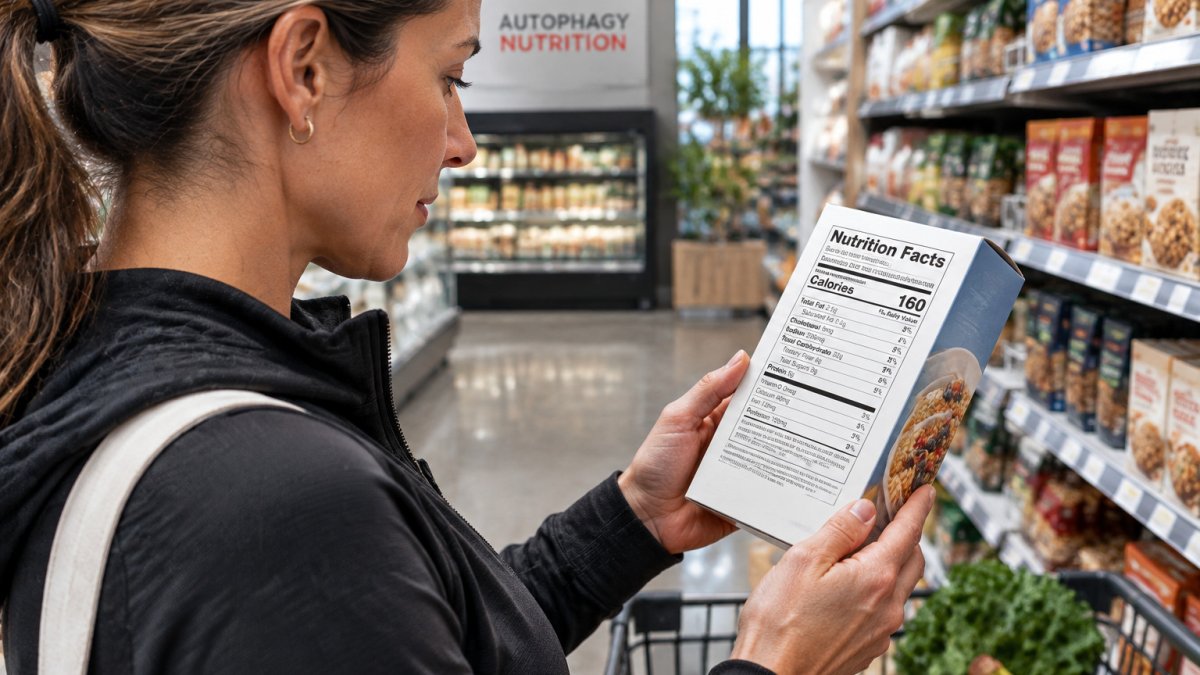
Follow these steps each time you shop:
- Find the serving size at the top of the label.
- Check how many servings the package contains.
- Find the sodium line and read the milligrams per serving.
- Multiply by the number of servings you will actually eat.
- Compare the total against your daily goal.
Look at the % Daily Value as a quick guide. The Daily Value for sodium is set at 2,300 mg, and the percentage shown on the label tells you how much of that amount one serving provides. Five percent or less is generally considered low, and 20 percent or more is high. This percentage is a quick comparison tool, not the same as the regulated "low sodium" claim some products carry on their packaging. Sodium and other mineral needs vary by person, so check guidance from your healthcare provider when it matters for your situation.
The U.S. Food and Drug Administration explains how to read the Nutrition Facts label on its FDA Nutrition Facts label guidance page, which is a useful reference when you are learning the format.
The label gives you the numbers you need to compare products quickly:
| Label item | What it tells you | How to use it |
|---|---|---|
| Serving size | The amount the sodium figure applies to | Check it first at the top of the label |
| Servings per package | How many servings the package contains | Multiply by the servings you actually eat |
| Sodium (mg) | Milligrams of sodium per serving | Read the number on the sodium line |
| % Daily Value, 5% or less | Generally considered low | Use as a quick low-sodium check |
| % Daily Value, 20% or more | Generally considered high | Use as a quick high-sodium check |
Ingredients That Contain Sodium Beyond Salt
Sodium does not always appear as the word "salt" on an ingredient list. Many additives contain sodium, and they can add up quickly.
Watch for these common terms:
- Sodium chloride (table salt)
- Monosodium glutamate (MSG)
- Sodium bicarbonate (baking soda)
- Sodium benzoate, a preservative
- Sodium nitrite, used in cured meats
- Disodium phosphate, used in processed cheese and meats
- Sodium alginate and sodium caseinate, used as thickeners and stabilizers
Ingredients appear in order of weight, from most to least, not in order of how much sodium they contribute. A sodium-containing ingredient near the top tells you about its weight in the product, not its sodium amount. The Nutrition Facts label's sodium total, not the ingredient list, is the reliable way to compare how much sodium a product actually contains.
Serving Size Math: Comparing Products Fairly
Two products can look similar but deliver very different amounts of sodium. The serving size is often the reason.
Here is a simple way to compare:
- Pick the sodium number for each product's listed serving.
- Confirm both serving sizes use the same unit, such as one cup or one ounce.
- Adjust the numbers to a common amount if the serving sizes differ.
- Compare the adjusted totals.
For example, a soup lists 800 mg per cup, but a typical can holds two servings. Eating the whole can means 1,600 mg. Many shoppers miss this step, so take a moment to do the math before you put the item in your cart.
What Low-Sodium Label Claims Actually Mean
Packages use several sodium claims, and they carry specific meanings defined by federal labeling rules. Read them carefully:
- Sodium-free or Free of sodium: less than 5 mg per serving.
- Very low sodium: 35 mg or less per serving.
- Low sodium: 140 mg or less per serving.
- Reduced sodium: at least 25 percent less sodium than the regular version.
- Light in sodium: at least 50 percent less sodium than the regular version.
- No salt added: no salt was added during processing, but the food may still contain natural sodium.
These are the general consumer definitions. Additional criteria apply to certain foods, including small-serving foods, meals and main dishes, so check the specific label rather than assuming one threshold covers every product.
The trap is that these claims are relative or threshold-based, not absolute. A "reduced sodium" product can still be high in sodium if the original version was very high, because the claim only promises a 25 percent cut from that specific baseline. "Light in sodium" promises a larger cut but says nothing about where the final number lands. "No salt added" tells you about the process, not the total, so a no-salt-added canned vegetable can still carry sodium that occurs naturally or arrives through other ingredients.
Use a two-step comparison instead of trusting the front of the package:
- Read the actual milligram number per serving on the Nutrition Facts panel.
- Confirm the two products you are comparing use the same serving size, then adjust to a common amount before deciding.
A product labeled "low sodium" at 140 mg per serving is genuinely low per serving, but if you eat three servings, the total is 420 mg. The claim is accurate and still not the whole story. Compare the milligram number for the amount you will actually eat, and treat the front-of-package claim as a starting hint rather than a verdict.
Your Next Step: Auditing Your Grocery Basket
Pick up your most-used packaged foods and work through them one at a time. For each item, write down the serving size, the sodium per serving, and how many servings you usually eat. Then rank the items from highest to lowest total sodium.
Focus on the top three to five items first. If electrolyte products are on your list, choose ones with appropriate sodium levels. Swapping one high-sodium staple for a lower-sodium option often makes the biggest difference. You can also look for fresh or minimally processed foods, which usually contain less added sodium.
If you are also paying attention to hydration and electrolytes, our guide to general electrolyte basics can help you think about sodium alongside potassium and magnesium. Keep your grocery list and your labels in sync, and revisit the audit every few months as your buying habits change.
Frequently Asked Questions
What are some hidden sources of sodium in food?
Many hidden sources of sodium are foods that may not taste salty. Breads and rolls, deli meats, pizza, soups, cheese, cottage cheese, and condiments such as sauces and dressings often carry substantial sodium because it is added for preservation, texture, and flavor. Packaged and prepared foods are the largest contributors for most people. Checking the sodium milligrams per serving on the Nutrition Facts label is the most reliable way to identify them before you buy.
How can you figure out the sodium content in packaged food?
Start with the Nutrition Facts label and find the line for sodium, listed in milligrams per serving. Then check the serving size at the top of the label, since the package may contain two or more servings. Multiply the sodium amount by the number of servings you actually eat. Compare that total with the Percent Daily Value, which is based on a 2,300-milligram daily reference amount. This simple calculation reveals how much a single packaged meal contributes to your day.
Which ingredients on a food label indicate added sodium?
Look for ingredients with sodium in the name, such as sodium chloride, sodium benzoate, sodium nitrite, sodium phosphate, monosodium glutamate, and sodium bicarbonate. Ingredients like baking soda, disodium inosinate, and some leavening agents also contribute sodium. Salt, brine, and soy sauce are other common signals. The earlier an ingredient appears in the list, the larger its share of the product by weight, but ingredient order does not tell you the actual sodium amount. For the real total, check the sodium line on the Nutrition Facts label.
Are foods labeled low sodium or reduced sodium always low in sodium?
Not always. A low-sodium claim on a U.S. label means the food contains 140 milligrams or less per serving, a defined regulatory threshold, while reduced sodium means at least 25 percent less sodium than the regular version, a comparison against a reference product. Reduced sodium does not mean the product is low in sodium, so a reduced-sodium soup can still contain substantial sodium. Additional criteria apply to certain foods, including small-serving foods, meals, and main dishes, so check the specific claim on the label. For the full rules, see the FDA's Sodium in Your Diet guidance page. Compare the actual milligram figure on the Nutrition Facts label against the unlabeled alternative to judge whether the product fits your needs.
