
Biohacking Supplies for Longevity: A Science-Backed Guide
Table of Contents
- What Biohacking Supplies Actually Do for Longevity
- Best Practices for Creatine Monohydrate Supplementation
- The Role of Electrolytes in Hydration and Recovery
- Cellular Health and NAD+ Support for Healthy Aging
- How to Build a Longevity-Focused Supplement Routine
- Quality Standards and Bioavailability in Longevity Supplements
- Personalizing Your Biohacking Strategy with Biomarkers
- Frequently Asked Questions
Last Updated: August 30, 2026
What Biohacking Supplies Actually Do for Longevity
Biohacking supplies for longevity is the term we use for supplements and strategies people commonly explore in connection with healthy aging, physical performance, hydration, muscle maintenance, and cellular biology. At Autophagy Nutrition, we think the more useful question isn't which product promises the most, it's which ingredients have an established nutritional or physiological role, which have human clinical evidence behind them, and which are still at the preclinical or mechanistic stage.
Cellular aging is associated with processes like oxidative stress, mitochondrial decline, and the buildup of metabolic byproducts, this is well established in the aging research literature. Whether a given supplement meaningfully changes those processes in humans is a separate question, and the evidence varies by ingredient. Creatine has strong human evidence for its role in cellular energy production in muscle. Electrolytes have an established role in hydration and in nerve and muscle function. NAD+ precursors are an active area of research, but human evidence for their effect on aging-related outcomes is still limited.
What separates a useful approach from noise is evidence-based selection: knowing which claims are backed by human clinical research, which rest on biomarker or cellular studies, and which are still mechanistic hypotheses. Categories like mitochondrial function, electrolyte balance, muscle preservation, and recovery capacity are commonly discussed in relation to strength and function as people age, but the strength of evidence differs by ingredient and outcome, and no single supplement determines those outcomes on its own.
This guide covers how to evaluate, select, and integrate biohacking supplies for longevity into a sustainable routine. We'll examine the specific roles of key supplement categories, quality standards that actually matter, and how to personalize your approach based on measurable biomarkers rather than guesswork.
Best Practices for Creatine Monohydrate Supplementation
Creatine monohydrate is among the most researched sports supplements, with strong human evidence for increasing muscle creatine and phosphocreatine stores and for supporting strength and power adaptations when combined with resistance training. It works by increasing phosphocreatine availability in muscle cells, which supports ATP regeneration during short, intense efforts like lifting or sprinting.
A commonly used approach is 3-5 grams daily, taken consistently, with no loading phase required. A loading protocol, around 20 grams per day for 5-7 days, saturates muscle creatine stores faster, while steady daily dosing reaches a similar saturation point over roughly 3-4 weeks and tends to be easier on digestion for some people. Consistency matters because muscle creatine stores build up gradually: an occasional missed dose won't undo your progress, but stopping for an extended period will gradually lower stores back toward baseline.
A common misconception is that creatine only works for younger athletes or competitive lifters. Human research, particularly when creatine is combined with resistance training, also supports its use in older adults for maintaining muscle mass and strength. Some research has looked at potential effects on cognitive performance, but that evidence is still preliminary and mixed, so we don't treat it as an established benefit.
Micronized creatine has a finer particle size, which improves mixability and reduces grittiness compared to standard monohydrate powder. This is a practical advantage if you're mixing it into beverages daily, better texture means better compliance.
Creatine draws some water into muscle cells as part of how it's stored, which is a normal part of the mechanism rather than something to be concerned about. General adequate hydration is a sensible practice when taking creatine, but there isn't strong evidence that being mildly under-hydrated stops creatine from working. Keeping up your usual fluid and electrolyte intake alongside creatine use is a reasonable, low-risk habit rather than a strict requirement.
The Role of Electrolytes in Hydration and Recovery
Electrolytes, sodium, potassium and magnesium, support fluid balance, nerve signaling and muscle function. Needs vary with sweat rate, exercise duration and intensity, heat, altitude, diet and individual physiology, not everyone needs the same amount, or any supplementation at all.
Plain water is not inherently dehydrating. In the context of prolonged endurance activity, drinking large amounts of water without replacing sodium can dilute blood sodium, which can affect fluid balance. Electrolytes support the body's ability to maintain fluid balance by helping regulate where water is retained, though the practical effect depends on sweat losses, activity duration and individual physiology.
Fatigue, muscle cramps and headaches during training can have many causes, and electrolyte status is one factor among several, alongside total fluid intake, sleep, training load and diet. For some people, especially those with high sweat rates or long training sessions, electrolyte intake is worth paying attention to; for others it isn't a significant factor.
Sodium is the primary electrolyte lost through sweat and plays an important role in fluid balance. Potassium supports muscle function and cardiovascular health. Magnesium is involved in muscle contraction and metabolic processes. A balanced electrolyte formula includes all three, though how much any individual needs depends on sweat rate, diet and activity level.
For people with meaningful sweat losses, such as longer or more intense training sessions, consuming electrolytes during and after exercise can help support fluid balance and rehydration, though individual response varies. Consistent training and recovery habits matter more than any single supplement timing strategy.
Cellular Health and NAD+ Support for Healthy Aging
NAD+ (Nicotinamide Adenine Dinucleotide) is a coenzyme involved in cellular energy production, DNA repair, and metabolic regulation. NAD+ levels decline with age, and this decline correlates with reduced mitochondrial function and impaired cellular repair processes.

NAD+ precursors like NMN (Nicotinamide Mononucleotide) provide a substrate the body can use to synthesize NAD+. In preclinical models, increasing NAD+ availability has been linked to improved mitochondrial function, energy metabolism and cellular repair processes. Whether raising NAD+ levels through NMN supplementation produces the same effects in humans, including on energy, recovery or metabolic health, is still under investigation, human evidence remains limited.
Declining mitochondrial efficiency is one proposed contributor to age-related changes in energy and recovery, and NAD+ availability is one factor researchers are studying in that context. This is a mechanistic hypothesis, not an established outcome of supplementation. NMN does not reverse or slow aging, and claims about direct effects on human energy, recovery or repair outpace current clinical evidence.
Autophagy Nutrition's Premium NMN provides 500 mg of Beta-Nicotinamide Mononucleotide per serving in a convenient capsule format, designed for daily use as part of a supplement routine focused on cellular health and healthy aging habits. This single-ingredient approach removes guesswork, you're getting pure NMN without unnecessary additives.

Claims that timing NMN or NAD+ precursor supplementation with training or fasting meaningfully enhances fasting, autophagy, recovery or adaptation are not supported by current human evidence. If you choose to take an NAD+ precursor, consistency of use is more relevant than specific timing relative to meals or workouts.
How to Build a Longevity-Focused Supplement Routine
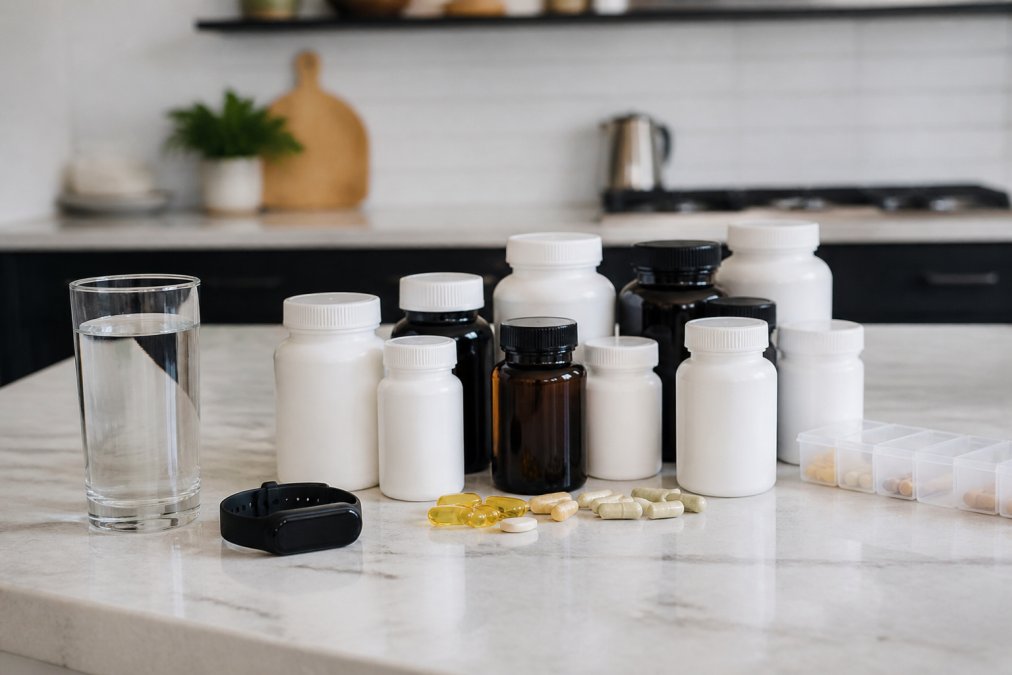
A sustainable supplement routine starts with identifying which interventions address your specific bottlenecks. The mistake most people make is adding supplements randomly, hoping something sticks. Instead, select based on measurable needs: training capacity, recovery speed, energy levels, or specific biomarkers.
Step 1: Define Your Primary Goal
Are you prioritizing muscular strength, hydration, or cellular energy metabolism? Your goal shapes which supplements are worth exploring. Creatine has the strongest human evidence here, particularly for strength and power output when paired with resistance training. Electrolytes play an established role in hydration and muscle function, though how much supplementation helps depends on your sweat rate, diet and activity level. NAD+ precursors like NMN are often explored by people interested in cellular energy metabolism, though human evidence for broader health outcomes remains limited.
Step 2: Match Supplements to Your Needs
Not everyone needs the same supplements. Creatine has the strongest human evidence of the three, particularly for strength and power output when paired with resistance training. Electrolyte supplementation may be useful when sweat losses, exercise duration, heat, diet, or other individual factors create a need for extra hydration support. NMN and other NAD+ precursors remain an optional area of interest, with emerging but still limited human evidence for meaningful health outcomes. Autophagy Nutrition's product line includes options across these categories, electrolyte hydration powders, creatine monohydrate, and NAD+ support compounds, so you can choose what matches your own needs.
Step 3: Assess Your Response
Take each supplement consistently for 4-6 weeks before adding another. Track measurable outcomes: training performance, recovery speed, energy levels, and sleep quality. This prevents the common trap of adding five supplements at once and having no idea which one (if any) is working.
Step 4: Layer Additional Support
Once your primary supplements are dialed in, you may want to explore additional options. Shilajit is one such compound, it provides fulvic acid and trace minerals, though shilajit as a whole product has a smaller and less established human evidence base than creatine. Autophagy Nutrition's Premium Shilajit Vitality Complex combines shilajit with complementary adaptogens for those interested in exploring it.

Step 5: Maintain Consistency
The most effective supplement routine is the one you actually follow. Simple is better than complex. A simple, evidence-informed routine that you can follow consistently is usually more practical than a complicated supplement stack. Build a routine that fits your lifestyle, morning with breakfast, post-training, or evening, and stick to it.
| Supplement Category | Established/Proposed Role | Human Evidence | Practical Consideration |
|---|---|---|---|
| Creatine Monohydrate | Muscle phosphocreatine; strength/power support with resistance training | Strong human evidence for specific performance and training outcomes | Consistent intake matters more than exact timing |
| Electrolytes | Fluid balance, nerve signaling and muscle function | Established physiological roles; supplementation benefit depends on losses and context | Match intake to sweat loss, exercise duration, heat, diet and individual need |
| NMN / NAD+ Precursors | NAD+ precursor; role in cellular metabolism | Human biomarker research exists; evidence for meaningful health or healthy-aging outcomes remains limited | No established optimal timing; follow product label |
| Shilajit | Contains a complex mixture including fulvic substances and minerals | Smaller and less established human evidence base; outcome-specific evidence varies | Follow product label; do not treat research doses as universal recommendations |
Quality Standards and Bioavailability in Longevity Supplements
Not all supplements are created equal. Quality factors can affect ingredient identity, purity, labeling accuracy and, in some cases, how a formulation is absorbed or used.
Bioavailability, the percentage of a compound your body can actually absorb and use, determines effectiveness. A supplement with poor bioavailability might contain the right ingredient at the right dose, but if your digestive system can't absorb it, you're wasting money.
Third-party testing is the minimum standard. Reputable manufacturers have their products tested by independent labs to verify ingredient identity, purity, and potency. This confirms that what's on the label is actually in the bottle and that contamination is absent. Autophagy Nutrition maintains rigorous quality standards, with products manufactured in the USA and tested for purity and potency.
Ingredient sourcing matters. Creatine monohydrate from a pharmaceutical-grade supplier performs identically to lower-grade creatine chemically, but consistency and purity differ. For NMN, sourcing and manufacturing quality affect purity and label accuracy, though independent human data comparing bioavailability across brands is limited.
Formulation design affects practical use. Micronized creatine improves mixability compared to standard powder, though particle size alone doesn't mean better absorption or effectiveness. Some NAD+ precursor formulations pair NMN with other compounds, but whether this meaningfully changes outcomes for the end user isn't well established.
Cost-benefit analysis matters for long-term adherence. Price alone does not establish supplement quality or effectiveness. Look instead at ingredient identity, label accuracy, manufacturing quality, purity and contaminant information, sourcing transparency, and legitimate testing or certifications where available.
Personalizing Your Biohacking Strategy with Biomarkers
Many people exploring supplements for healthy aging and performance find it useful to track measurable data rather than relying on generic recommendations alone. Biomarkers can give you objective feedback on changes that may be associated with a supplement routine, though a biomarker shift on its own is not the same as a proven health benefit.
Biomarkers sometimes discussed in this context include mitochondrial function markers, inflammatory status, metabolic health indicators, and muscle preservation metrics. Testing these before and after starting a supplement routine can show whether a measured value changed, though a change in a biomarker is not the same as a proven health benefit.
NAD+ levels themselves can be measured, though the test is expensive and not widely available. Subjective measures like energy levels, recovery speed, and training performance are sometimes tracked as a substitute, but these are influenced by many factors and have not been shown to reliably reflect NAD+ status or to change as a result of NMN or NAD+ supplementation in humans.
Muscle mass and strength are reasonable markers to track for creatine, since human research links creatine supplementation combined with resistance training to increased muscle creatine stores and strength or power adaptations over time. Individual response varies, so tracking strength or training volume over weeks to months, alongside consistent training, is a more realistic way to gauge whether it is making a difference for you than expecting a result by a fixed date.
Hydration and electrolyte balance can influence how you feel and perform during exercise, though the degree varies by individual, sweat rate, and conditions. Cramping or fatigue during training has many possible causes, electrolyte status is only one of them, so how you feel during training is one data point to consider rather than a definitive read on electrolyte adequacy.
Testing your own assumptions is still useful. Don't assume a supplement is doing something because the label implies it. Measure something, try the supplement, and measure again over a reasonable period. A change in the metric is informative, but treat it as one data point rather than proof of a health benefit, and adjust or discontinue based on the full picture, including how you actually feel and perform.
Building a supplement routine around healthy aging and performance goals works best when you move beyond marketing claims to what the evidence actually supports. Cellular energy production, muscle maintenance, hydration, and recovery are among the areas people commonly look at when choosing supplements. Autophagy Nutrition's product line is built around these areas, from electrolyte hydration powders to NAD+ support and creatine monohydrate, each formulated around a specific area of interest in aging and performance. Start with the basics, track measurable outcomes, and adjust based on data rather than assumptions. Consistency and quality matter far more than complexity. Get started with Autophagy Nutrition and build a supplement routine that fits your goals for strength, recovery, and everyday wellness.
Frequently Asked Questions
What makes quality biohacking supplies different from standard supplements?
Quality supplements in this space tend to focus on bioavailability, purity, and well-sourced ingredient forms. Price alone is not a reliable indicator of quality or effectiveness. What matters more is documented manufacturing quality, ingredient identity, purity and contaminant information, label accuracy, sourcing transparency, and legitimate independent testing or certifications where available. Better bioavailability generally means your body can make use of more of what you take, though that is a difference in nutrient uptake, not a guaranteed effect on long-term health or recovery.
How do I know which supplements fit my health and performance goals?
Start by thinking about what you are actually trying to support, recovery, performance, energy, hydration, or general wellness as you age. Creatine monohydrate has solid human research behind its role in muscle strength and power when combined with resistance training. Electrolyte formulas have an established role in hydration and in muscle and nerve function, though the right amount depends on your sweat rate, activity, and diet. NAD+ support and NMN are grounded mainly in research on NAD+ biology and precursor metabolism, human evidence for health outcomes from supplementation is still limited, so it is worth treating claims in that category more cautiously. Your lifestyle is a reasonable filter: creatine may be more relevant depending on your resistance training, strength, and muscle-function goals, electrolyte supplementation depends primarily on your sweat losses, exercise duration and intensity, heat, diet, fluid intake, and individual need, and NAD+ support is better understood as an area of ongoing research than as a solution for a specific goal like energy or cognitive performance.
What is the role of electrolytes in hydration and recovery, and why not just drink water?
Sodium, potassium, and magnesium play established roles in fluid balance, nerve signaling, and muscle function, and you lose some of these minerals through sweat. Whether you need to actively replace them with a supplement depends on your sweat rate, how long and intense your activity is, heat, diet, and overall fluid intake, not everyone does. Plain water is not inherently dehydrating, but during prolonged endurance activity, drinking large amounts of water without replacing sodium can dilute blood sodium levels. Electrolyte formulas are one option for people with higher sweat losses or longer training sessions. Whether a flavored electrolyte product fits a fasting protocol depends on your own fasting definition and goals, some people use them around exercise, before a fast, during an eating window, or when breaking a fast.
Is it realistic that supplements alone will improve my recovery and energy at 40+?
Supplements alone are unlikely to be the main driver. Sleep, consistent exercise, stress management, and nutrient-dense eating form the foundation, and supplements work alongside that rather than replacing it. Creatine monohydrate has human research supporting a role in muscle strength and power when paired with resistance training. Electrolytes have an established role in hydration, with the right amount depending on your sweat rate and activity. NAD+ support and NMN are grounded in research on NAD+'s role in cellular metabolism, but human evidence that supplementation meaningfully changes energy, recovery, or cognitive outcomes is still limited, so it is reasonable to be skeptical of specific promises there. Recovery does slow naturally after 40, and a consistent routine built on the basics, with supplements as a supporting piece, is a more realistic expectation than any single product producing fast or guaranteed results.