
10 Best Practices for Healthy Aging in 2026
Table of Contents
- 1. Move Daily: The Strongest Lever for Healthy Aging
- 2. Eat for Function, Not Just Calories
- 3. Protect Sleep: The Recovery Window Most Adults Shortchange
- 4. Manage Stress Before It Manages Your Health
- 5. Keep the Mind Active and the Social Circle Close
- 6. Stay on Top of Preventive Care and Screenings
- 7. Mitochondrial Support Supplements: What the Evidence Shows
- 8. Best Anti-Aging Supplements for Men Over 60: What to Look For
- 9. Make Your Environment and Life Logistics Support Healthy Aging
- 10. Build Habits That Are Sustainable
- Frequently Asked Questions
Last Updated: September 25, 2026
1. Move Daily: The Strongest Lever for Healthy Aging
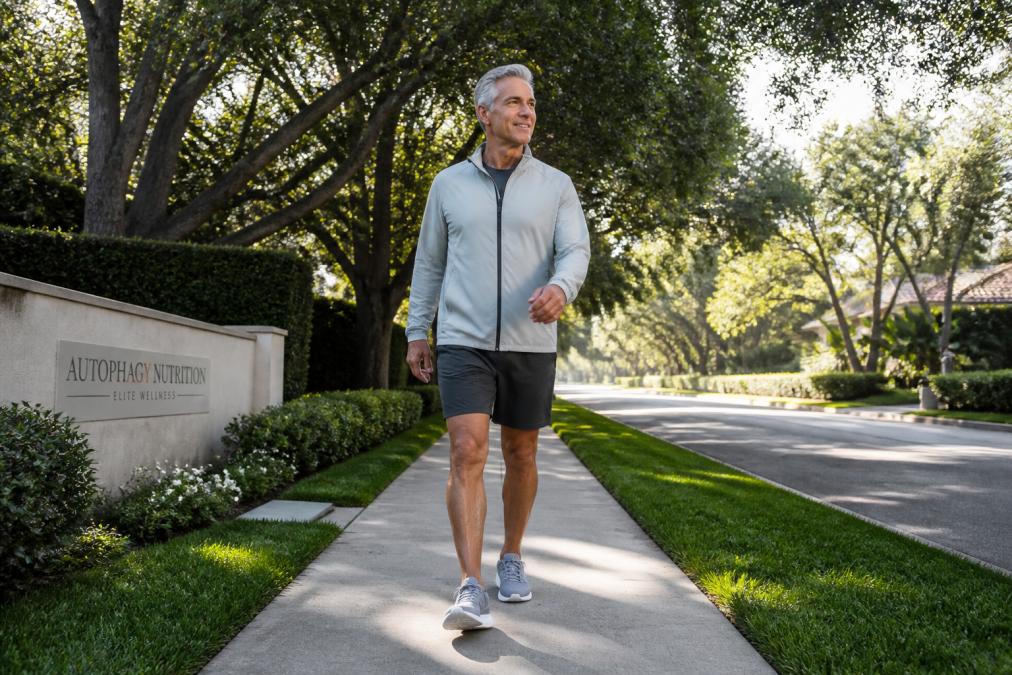
Physical activity is the most reliable lever for healthy aging, working through cardiovascular health, muscle retention, balance, and metabolic function at once.
How Much Activity Actually Matters
Federal guidance points to at least 150 minutes of moderate activity weekly plus two strength sessions. That is the floor, not the ceiling.
A practical weekly mix looks like this:
| Activity Type | Weekly Target | Primary Benefit |
|---|---|---|
| Brisk walking or cycling | 150 minutes | Cardiovascular health |
| Resistance training | 2 sessions | Muscle and bone density |
| Balance work | 2-3 sessions | Fall prevention, mobility |
| Mobility or stretching | Daily, brief | Joint range, flexibility |
2. Eat for Function, Not Just Calories
Nutrition for healthy aging is less about restriction and more about giving your body what it needs to maintain muscle, bone, and organ function.
Build meals around:
- Lean protein at each meal to support muscle maintenance
- Nutrient-dense vegetables and fruit for fiber, vitamins, and minerals
- Whole grains for steady energy and digestive health
- Healthy fats from nuts, seeds, olive oil, and fish
- Hydration, maintained adequately throughout the day
3. Protect Sleep: The Recovery Window Most Adults Shortchange
Sleep is when the body repairs tissue, consolidates memory, and regulates hormones. Chronic short sleep is linked to poorer metabolic and cardiovascular outcomes and undermines nearly every other healthy aging habit.
- Keep a consistent bedtime and wake time, weekends included
- Get bright light in the morning and dim it in the evening
- Keep the bedroom cool, dark, and quiet
- Limit caffeine in the afternoon and alcohol near bedtime
- Put screens away 30 to 60 minutes before bed
4. Manage Stress Before It Manages Your Health
Chronic stress keeps the body in a low-grade alert state, with real consequences for cardiovascular health, sleep, and mental well-being. Managing it is maintenance, not a luxury.
Approaches that hold up well:
- Mindfulness and breathing practice, even a few minutes daily
- Regular physical activity, which doubles as stress relief
- Social connection, because isolation amplifies stress
- Time in nature, which reliably lowers arousal
- Clear boundaries around work and screens
5. Keep the Mind Active and the Social Circle Close
Cognitive function and social connection both need regular use to stay strong, and both decline quietly when neglected.
What Cognitive Training Research Actually Shows
Brain-training games improve the thing you practice, but transfer to everyday function is smaller and less certain than marketing suggests. A few findings are worth knowing:
- Learning genuinely new skills (a language, an instrument, a complex card game) has shown broader cognitive benefit in older adults than repeating puzzles you are already good at. Novelty and difficulty seem to matter more than volume.
- Aerobic exercise has among the strongest human evidence for supporting cognitive health with age, which is one more reason movement belongs at the top of this list.
- Puzzles and reading are worth keeping for enjoyment and engagement, but they are not a proven defense against cognitive decline on their own.
- Social conversation is itself cognitively demanding, which is part of why isolation and cognitive decline travel together.
Make Social Contact Structural, Not Optional
Loneliness is associated with poorer cognitive and cardiovascular outcomes and tends to creep in quietly after retirement, a move, or the loss of a spouse. Waiting to feel lonely before acting is a mistake, because the drift is gradual.
What tends to work:
- Schedule contact the way you schedule a workout. A standing weekly call, a recurring lunch, a walking partner. If it is not on the calendar, it does not happen.
- Join something with a built-in rhythm. A faith group, a volunteer shift, a club, a class. Recurring structure does the work that willpower cannot.
- Mix generations. Time with younger people keeps you connected to a wider world and often adds practical help in both directions.
- Watch for the signals. Skipping events you used to enjoy, letting calls go unanswered, and losing interest in hobbies are worth taking seriously, in yourself or in someone you love.
The Caregiver Side of the Equation
If you support a parent or partner, your own sleep, stress, and social connection are part of their care plan. Caregiver burnout is common and predictable, and it tends to show up as the caregiver's own health declining first. Respite, shared responsibilities, and honest conversations about what is sustainable belong in the plan from the start.
6. Stay on Top of Preventive Care and Screenings
Preventive care is where healthy aging gets concrete. Routine check-ups and screenings catch problems while they are still easy to address, and the biggest gains come from consistency rather than any single test.
A reasonable baseline for most adults includes:
- Annual physical with blood pressure and basic labs
- Age-appropriate cancer screenings, guided by your clinician
- Vaccinations kept current
- Dental and vision exams on schedule
- Mental health check-ins, which are part of the picture
Make the Visit Count
A fifteen-minute appointment goes further if you arrive prepared:
- Bring a current medication list, including supplements and over-the-counter drugs. Interactions are a common and preventable problem after 60.
- Write down your top two or three concerns before the visit. The thing you almost forgot to mention is often the thing that matters.
- Ask what changed and why. If a recommendation is new, ask what it is based on and what the trade-offs are.
- Ask about function, not just numbers. Balance, grip strength, sleep, mood, and how easily you get up from a chair are all clinically meaningful and often more predictive of independence than a single lab value.
Home Safety: The Preventive Care Nobody Schedules
Most falls happen at home, and most are preventable. This part of preventive care rarely gets its own appointment, and it is one of the highest-value things you can do.
Practical, low-cost modifications worth considering:
- Grab bars in the shower and next to the toilet, installed into studs or with proper anchors
- Better lighting, especially on stairs, in hallways, and on the path from bed to bathroom
- Loose rugs removed or secured with non-slip backing
- A night light in the bathroom and hallway
- Clear walking paths free of cords, clutter, and low furniture
- Non-slip mats in the tub and shower
- Sturdy shoes indoors, not just outside
Managing Chronic Conditions Is Preventive Care Too
If you have high blood pressure, diabetes, or another long-term condition, staying consistent with treatment is one of the highest-value things you can do for long-term well-being. The same applies to hearing and vision, which strongly affect social connection, driving safety, and cognitive engagement.
The Caregiver's Preventive Care
If you arrange appointments, manage medications, and drive to visits, your own check-ups tend to be the first thing dropped. Schedule your annual visit when you schedule theirs, and treat it as non-negotiable.
7. Mitochondrial Support Supplements: What the Evidence Shows
"Mitochondrial support" is a broad wellness term, not a specific medical outcome. Mitochondria are central to cellular energy metabolism, but raising a molecule involved in mitochondrial biology does not automatically mean more energy, longer life, or slower aging.
NMN and NAD+: Promising but Not Proven for Longevity
NMN is a precursor involved in NAD+ metabolism. Human studies have investigated NMN supplementation and NAD+-related outcomes, but the research does not show that NMN reverses aging, extends human lifespan, rejuvenates cells, or prevents age-related disease. Increases in NAD+ or related biomarkers are not proof of longevity or clinical benefit.
Creatine: Strong Evidence for Muscle, Not for Anti-Aging
Creatine has strong human evidence for muscle and performance applications. It plays a role in cellular energy buffering through the phosphocreatine system, a relationship that is real and well described.
Other Ingredients Worth Knowing
Each of these should be evaluated on its own, not lumped together as equally proven:
- CoQ10: Involved in mitochondrial energy production. Studied in specific populations, including people on statins and some with heart failure. Evidence is mixed and population-specific.
- Magnesium: A cofactor in many reactions, including energy metabolism. Inadequate magnesium intake can occur in some populations, and correcting a genuine deficiency matters. Evidence in already-replete adults is weaker.
- B vitamins: Support normal energy metabolism. Benefits are clearest in people who are deficient, not in those who already have adequate intake.
- Alpha-lipoic acid, PQQ, acetyl-L-carnitine: Mechanistic and preliminary human research exists. Evidence is limited and does not yet support firm conclusions.
- Resveratrol and urolithin A: Studied for mitochondrial and cellular pathways. Human evidence remains early and mixed.
8. Best Anti-Aging Supplements for Men Over 60: What to Look For
There is no single best anti-aging supplement. What you can do is choose well-supported ingredients and pair them with the fundamentals.
When evaluating any product, ask:
- Is there human evidence for this ingredient, in a population like mine?
- Is the dose in the product close to what research used?
- Does the label disclose the full ingredient list and amounts?
- Is the manufacturer transparent about sourcing and testing?
- Does the seller make claims the evidence cannot support?
- Premium NMN (product page) provides 500 mg of NMN per serving in a single-ingredient capsule, for adults who want a simple way to include NMN in a daily routine.
- NAD+ Support (product page) combines NAD+ with quercetin and resveratrol in a capsule format.
- Premium Creatine Monohydrate Powder (product page) supports the muscle and performance applications where creatine has the strongest human evidence.
- Lychee Electrolyte Hydration Powder (product page) supports hydration with sodium, potassium, magnesium, and calcium, and no sugar or caffeine.
9. Make Your Environment and Life Logistics Support Healthy Aging
Staying active and independent depends on more than exercise and diet. A safe home, organized paperwork, and a plan for getting around all reduce the everyday barriers that can turn a minor setback into a major one.
- Home safety: Address fall hazards such as loose rugs, poor lighting, and stairs without handrails. Grab bars in the bathroom and clear walkways matter more than most people expect.
- Medication management: Keep an up to date list of medications and dosages, and review it with a doctor or pharmacist periodically, especially after any new prescription.
- Financial and healthcare organization: Keep insurance information, advance directives, and key contacts accessible, and make sure a trusted person knows where to find them.
- Transportation planning: Have a backup plan for getting to appointments, the gym, or social activities if driving becomes harder, so those activities do not quietly stop.
None of this needs to happen at once. Working through it a piece at a time removes friction that can otherwise get in the way of staying active and engaged.
10. Build Habits That Are Sustainable
Consistency over months and years matters more than any single routine done perfectly for a few weeks. The practices in this guide only help if they are still happening a year from now.
- Habit stacking: Attach a new habit to one that is already established, like stretching right after brushing your teeth, so it does not depend on remembering or extra willpower.
- Realistic routines: A routine you will actually keep beats an ideal one you abandon after a month. Start smaller than feels necessary.
- Track what matters: Simple tracking, such as workouts completed or hours slept, helps you notice what is working without turning healthy aging into a full time job.
- Adjust as needed: Health and function change over time, so routines should too. There is no single perfect longevity routine, only the one you can sustain given your current circumstances.
Frequently Asked Questions
What are the 10 keys to healthy aging?
The ten practices covered here are: daily physical activity, nutrient-dense eating, sleep hygiene, stress management, cognitive and social engagement, preventive screenings, informed use of mitochondrial support supplements, targeted supplement choices for men over 60, practical life logistics like finances and home safety, and habit-building that sticks. No single practice carries the full load. Exercise and sleep have the strongest human evidence; supplements play a supporting role at best.

Do mitochondrial support supplements actually work?
It depends on the ingredient. Creatine has strong human evidence for muscle and performance, and its role in cellular energy buffering is well established. NMN has been studied in humans for NAD+ related outcomes, but increases in biomarkers do not prove slower aging or longer life. Other ingredients like CoQ10 and urolithin A have narrower or mixed evidence. The biological rationale is often stronger than the clinical evidence, so treat these as complementary to lifestyle, not replacements.
What should men over 60 look for in anti-aging supplements?
Focus on ingredients with human data in your age group. Creatine monohydrate has the strongest evidence for supporting strength, lean mass, and exercise performance, particularly alongside resistance training. NMN and NAD+ precursors have been studied but do not have proven anti-aging outcomes. Check for third-party testing, clear dosing, and single-ingredient formulas where possible. Avoid products that promise to reverse aging or repair mitochondria. Talk to your doctor before adding anything, especially if you take prescription medications.
How does physical activity influence mitochondrial function?
Exercise is one of the few interventions with consistent human evidence for improving mitochondrial function. Endurance training increases mitochondrial density and enzyme activity in skeletal muscle, and resistance training supports muscle quality and metabolic health. These adaptations are measurable in biopsies and translate to better physical resilience. Exercise has substantially stronger and more consistent human evidence for these adaptations than supplements marketed for mitochondrial support. Aim for a mix of aerobic activity and strength training most days of the week.
Can supplements replace lifestyle habits for healthy aging?
No. Exercise, sleep, nutrition, and stress management have the strongest and most consistent human evidence for supporting healthy aging. Supplements may fill specific gaps, like creatine for muscle support or electrolytes for hydration during activity, but they cannot substitute for the fundamentals. Think of them as one layer in a broader routine, not the foundation. If a product promises to replace exercise or sleep, that is a red flag.